
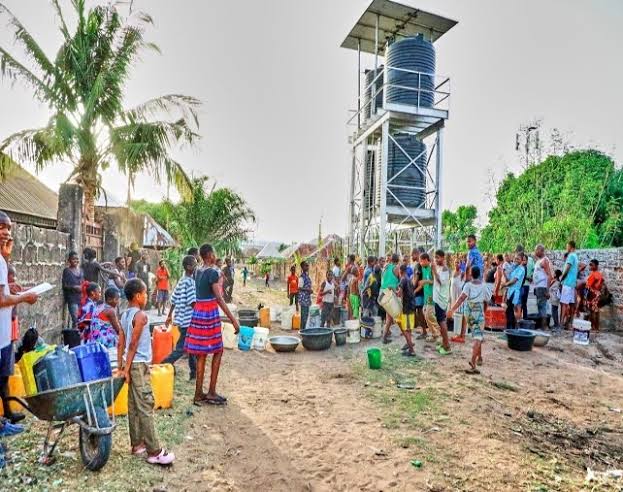
In an effort to bolster food security and climate resilience, northern Nigeria’s Kano State has completed the installation of 10 solar-powered boreholes, part of a broader initiative to address water scarcity and environmental challenges. The project, managed by the Agro-Climatic Resilience in Semi-Arid Landscapes (ACReSAL) program, aims to provide year-round access to clean water for both domestic and agricultural use in regions grappling with a short rainy season and recurrent droughts. Maryam Abdulqadir, communications officer for ACReSAL, emphasized the significance of the boreholes in a public statement released Saturday. “This marks a critical milestone in our mission to mitigate climate impacts and secure water resources for vulnerable communities,” she said. The installations, funded under the World Bank-backed Water Resources Management program, include upgrades such as perimeter fencing, solar streetlights, and designated water points to ensure sustainability and accessibility. Abdulqadir directly addressed social media claims that the boreholes relied on manual hand pumps, calling such reports “inaccurate.” She clarified that all systems were solar-powered and constructed under strict international procurement standards. “We invite journalists and residents to verify the sites themselves, as geo-coordinates for each location are publicly available,” she added. Key installations span areas including the School of Midwifery in Danbatta, Tsamiya Babba in Gezawa, and Kano Municipal’s Kofar Mata district. Beyond water infrastructure, the initiative integrates erosion control measures and community mobilization to reduce disaster risks. Abdulqadir highlighted parallel efforts to strengthen economic resilience, including the disbursement of ₦375 million (approximately $250,000) in revolving funds to 10 rural communities. These grants aim to enhance agricultural processing, small business development, and supply chain efficiency. “This isn’t just about water access—it’s about fostering long-term empowerment,” she noted. The project’s waste management component has also seen progress, with 10 refuse trucks and two payloaders delivered to Kano’s sanitation board to improve urban cleanliness. Abdulqadir stressed that these efforts align with broader institutional reforms to position Kano as a model for climate adaptation. “Every intervention moves us closer to a greener, more resilient future,” she said, underscoring the state’s commitment to balancing ecological sustainability with community needs. With semi-arid regions worldwide facing escalating climate pressures, Kano’s multi-pronged approach offers a test case for addressing water insecurity, economic fragility, and environmental degradation in tandem. Local authorities say transparency remains a priority, urging stakeholders to monitor ongoing projects as they expand across the state.
Metro News Africa
2 min read
Kano Solar Boreholes Boost Climate Resilience, Water Access
In an effort to bolster food security and climate resilience, northern Nigeria’s Kano State has completed the installation of 10 […]
More stories like this

Metro News Africa
Where Art Meets Engineering: The Minds Shaping Tomorrow’s World

Metro News Africa
Tunisia tops Morocco among French travellers despite booking dip

Metro News Africa
IGP Disu Removes 6 MOPOL Commanders Over ₦70k Extortion
![Troops, terrorists exchange gunfire in Kogi [VIDEO]](https://mediatalkafrica.com/wp-content/uploads/2026/01/Terrorists-Exchange-Gunfire-With-Nigerian-Troops-In-Kogi-State-768x576.jpeg)
Metro News Africa
Comments are closed for this story.