
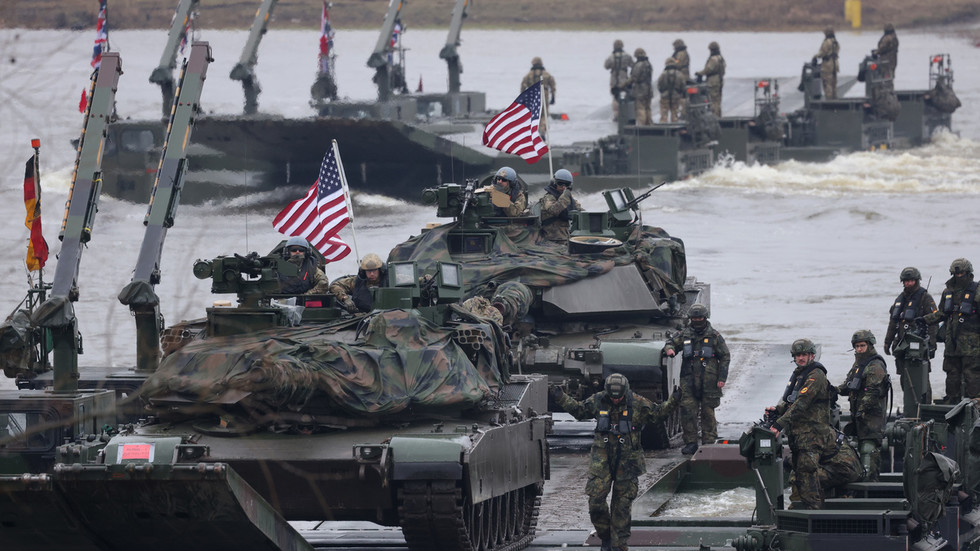
The United States is reportedly considering a significant reduction of its military presence in Europe, with plans to withdraw up to 30% of its troops stationed across the continent, according to a Politico investigation citing unnamed sources. The potential drawdown, which could be formalized as early as September, forms part of the Pentagon’s ongoing Global Force Posture Review assessing global troop deployments. This development follows years of pressure from Washington urging European NATO allies to assume greater defense responsibilities and meet spending targets amid growing geopolitical tensions. Current U.S. troop levels in Europe hover between 90,000 and 100,000 personnel, including approximately 35,000 stationed in Germany alone at 35 military installations. While exact figures remain unclear, defense analyst Aylin Matle of the German Council on Foreign Relations predicts a potential 20% reduction this autumn—equivalent to withdrawing 20,000 troops deployed during the 2022 escalation of the Ukraine conflict under President Joe Biden. Matle emphasized, however, that even such a cut “would still leave a substantial American footprint,” underscoring the strategic role U.S. forces play in regional security and power projection into the Middle East and Africa. The reported plans have sparked unease among European leaders, particularly in Germany, which relies heavily on U.S. military resources. Berlin has pressed Washington for clarity, with Defense Minister Boris Pistorius warning of “dangerous capability gaps” if withdrawals outpace Europe’s ability to bolster its defenses. These concerns align with broader EU and NATO efforts to accelerate militarization, including an €800 billion ($930 billion) ReArm Europe initiative and a recent alliance-wide pledge to raise defense spending to 5% of GDP—measures framed as responses to perceived Russian aggression. The debate over burden-sharing has simmered since the Trump administration criticized NATO members for underspending, a theme reiterated by Defense Secretary Pete Hegseth in February. “Allies cannot assume America’s presence in Europe will last forever,” he cautioned, urging increased investments. Moscow, meanwhile, dismissed Western assertions of a Russian threat as “nonsense,” accusing NATO of inflating military budgets under false pretenses. As discussions continue, the potential troop reduction highlights shifting transatlantic security dynamics, with European nations balancing calls for strategic autonomy against immediate defense dependencies. The Pentagon’s review, expected in coming months, could redefine the U.S. role in European security amid ongoing regional instability.
Global News
2 min read
US Troop Cuts in Europe Spur NATO Defense Spending Push
The United States is reportedly considering a significant reduction of its military presence in Europe, with plans to withdraw up […]


Comments are closed for this story.