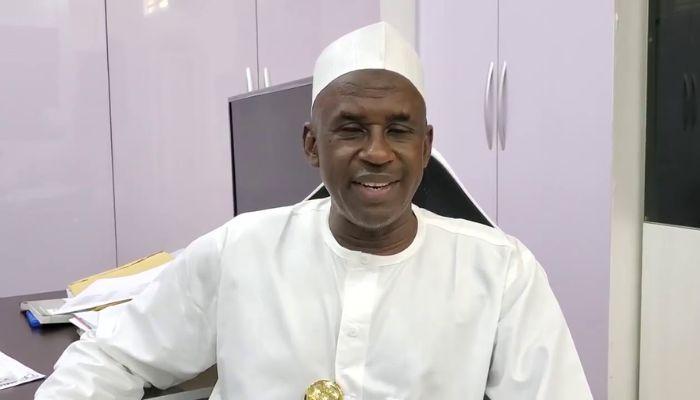
Abia State’s political dynamics have taken a notable turn following a high-profile meeting between Governor Alex Otti and his predecessor’s deputy, Ude Oko Chukwu, hinting at a potential shift in alliances ahead of upcoming elections. The closed-door discussion, which took place in the state’s capital, has drawn attention to evolving strategies within Nigeria’s southeastern political landscape, particularly as factions within the opposition consider realigning with Otti’s Labour Party.
Ude Oko Chukwu, a seasoned political figure who served as Deputy Governor under former Governor Okezie Ikpeazu from 2015 to 2023 and previously as Speaker of the Abia State House of Assembly, described the visit as a gesture of appreciation for Otti’s policies. He specifically praised the administration’s infrastructure upgrades, economic reforms, and efforts to improve sanitation in urban centers. “I came to commend the governor for the visible progress in Abia,” Chukwu stated. “His commitment to transforming the state’s physical and economic environment is undeniable.”
While the meeting sparked speculation about Chukwu’s political plans, he emphasized that his visit was not driven by partisan maneuvering. Instead, he framed it as an endorsement of Otti’s performance. “This isn’t about politics or propaganda,” he said. “Based on his achievements, Governor Otti has clearly earned another term.” This public backing from a prominent member of the opposition People’s Democratic Party (PDP) underscores growing cross-party acknowledgment of the governor’s initiatives.
When questioned about possible defections to the Labour Party, Chukwu remained circumspect but acknowledged broader discussions within PDP ranks. “Realignments are happening,” he noted, adding that he would publicly declare his stance if he decided to join the movement. His remarks echo recent reports of opposition figures in Abia North—a politically significant zone where Chukwu wields influence—exploring collaborations with Otti’s administration.
The interaction reflects a trend of pragmatic alliances in Nigerian politics, where performance assessments increasingly shape loyalties. Otti, who assumed office in May 2023, has prioritized road construction, waste management, and attracting investment to revitalize Abia’s economy. Critics, however, caution that infrastructure projects alone may not address systemic challenges like unemployment and inflation.
For now, Chukwu’s overture signals a potential consolidation of support for Otti ahead of the 2027 gubernatorial race, while underscoring the fluidity of political affiliations in a region historically marked by competitive party loyalties. Analysts suggest such realignments could reshape electoral outcomes, particularly if seasoned politicians like Chukwu mobilize their networks in favor of the incumbent. As the governor’s policies continue to dominate public discourse, the stakes for both his administration and the opposition remain tightly intertwined with Abia’s developmental trajectory.