
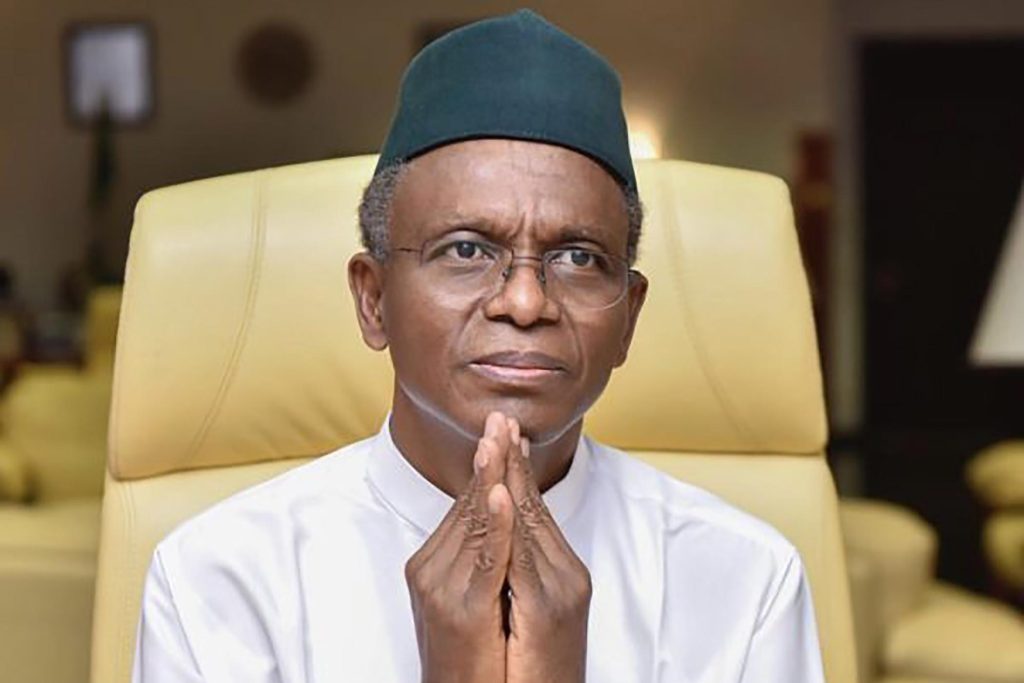
Rev. John Joseph Hayab, chairman of the Christian Association of Nigeria for the 19 northern states and the Federal Capital Territory, has sharply criticized the governance style of former Kaduna State governor Nasir El‑Rufai. Speaking on a television program, Hayab said El‑Rufai’s approach to conflict resolution left many communities feeling neglected during his tenure from 2015 to 2023. His remarks came in response to El‑Rufai’s recent claim that he has no regrets about his actions while in office. Hayab described those comments as insensitive to the experiences of communities that suffered violence under El‑Rufai’s administration.
The CAN leader also raised concerns about the distribution of development projects, alleging that certain communities benefited less from the state’s urban‑renewal program, which was financed with loans. He highlighted the long‑standing debate over the population of Southern Kaduna, emphasizing that the region constitutes a significant proportion of the state’s residents and should not be overlooked in political considerations.
Hayab disclosed that he initially supported El‑Rufai’s candidacy in 2015 but later grew dissatisfied with his leadership, which he characterized as intolerant and dismissive of opposing views. In contrast, he praised former leaders such as Ahmed Makarfi, Namadi Sambo, the late Patrick Yakowa, and Ramalan Yero for making more deliberate efforts to foster peace and unity in the state.
Calling on current leaders in Kaduna to adopt a more inclusive style of governance, Hayab urged them to prioritize peace and stability. His comments underscore the need for effective conflict resolution and inclusive governance in a state that has experienced periods of violence and unrest in recent years. While the urban‑renewal program was a key initiative during El‑Rufai’s tenure, aimed at improving infrastructure and promoting economic development, Hayab’s allegations of uneven benefit distribution suggest that its impact was limited for certain communities. As Kaduna continues to navigate its complex social and economic landscape, Hayab’s appeal for more inclusive governance and effective conflict resolution is likely to resonate with many stakeholders.

![Troops, terrorists exchange gunfire in Kogi [VIDEO]](https://mediatalkafrica.com/wp-content/uploads/2026/01/Terrorists-Exchange-Gunfire-With-Nigerian-Troops-In-Kogi-State-768x576.jpeg)

Comments are closed for this story.