
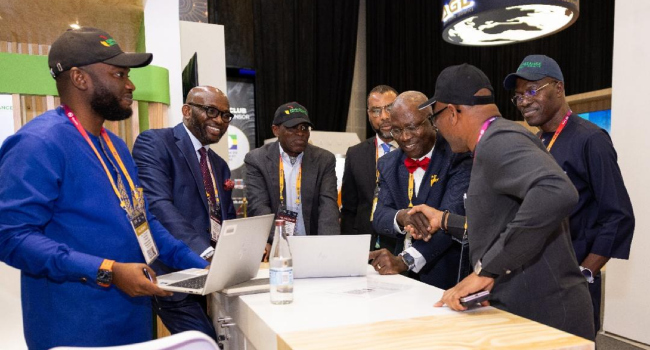
Nigeria’s Renaissance Africa Energy Company Limited has urged African nations to assume full ownership of the continent’s hydrocarbon resources, stressing that energy leadership is essential for industrialisation and sustainable development. Dr Layi Fatona, Chairman of the Board of Directors at Renaissance, warned that despite Africa’s abundant natural wealth, the region remains overly dependent on external entities. He called for a more strategic approach that leverages cutting‑edge technologies to maximise existing assets and secure a cleaner energy future.
Speaking at Africa Energy Week in Cape Town, Dr Fatona highlighted the importance of advanced technologies—such as improved seismic imaging and enhanced rig capabilities—to boost exploration and production in mature basins. He pointed out that depleted reservoirs in the Niger Delta, Sirte Basin and Lower Congo Basin could be repurposed for CO₂ storage, supporting decarbonisation and the continent’s energy transition.
Dr Fatona lamented Africa’s long‑standing failure to translate its natural resources into meaningful development, citing a need for deeper strategic thinking and innovative work processes. He urged leaders to deploy advanced technologies to optimise current assets, emphasizing the opportunity for Africa to lead its own energy revolution.
Renaissance, a wholly owned subsidiary of Renaissance Africa Energy Holding Company, operates Nigeria’s largest upstream joint venture, which includes NNPC Limited, TotalEnergies, and Agip Energy and Natural Resources. The company’s vision aligns with the continent’s goal of achieving sustainable development through responsible energy management.
The appeal from Renaissance Africa Energy Company underscores the significance of energy independence and strategic resource management in driving Africa’s economic growth and industrialisation. As the continent navigates its energy landscape, adopting innovative technologies and strategic approaches will be crucial to unlocking vast hydrocarbon resources and achieving a more sustainable energy future.



Comments are closed for this story.