

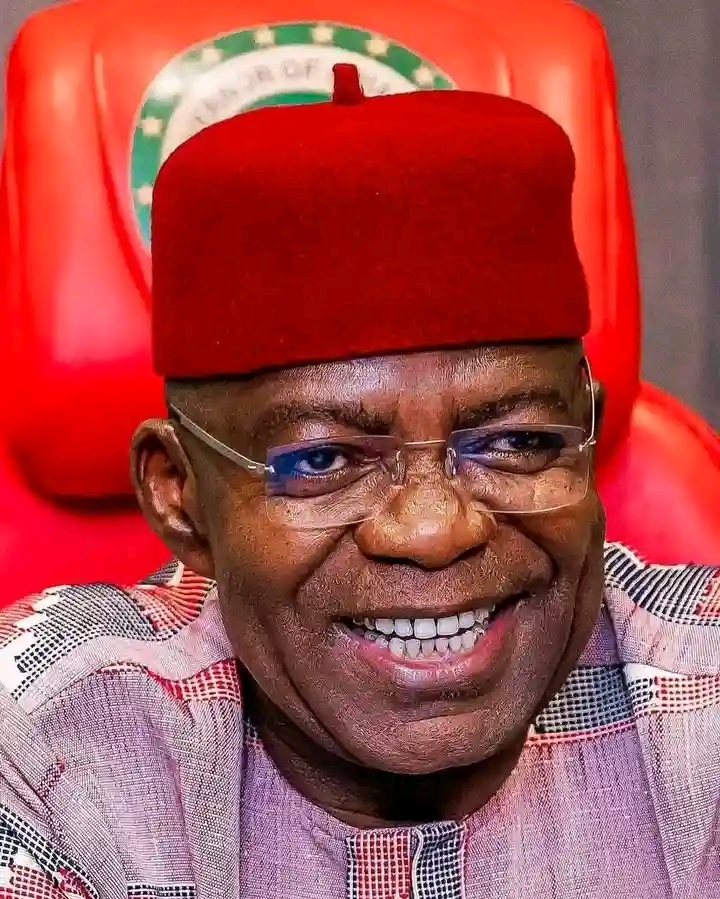
Nigeria’s energy sector requires a balanced approach to reforms and national realities to ensure a sustainable future, according to Dr. Uchechukwu Ogah, President of Masters Energy Group and former Minister of State for Mines and Steel Development. Speaking at the NAEC Energy Conference 2025, Dr. Ogah emphasized the need for stakeholders to harmonize policy, investment, and innovation to achieve sustainable growth.
He highlighted the crucial role of the Petroleum Industry Act (PIA) of 2021 and the Electricity Act of 2023 in Nigeria’s energy transition. While the PIA has the potential to transform the sector, its successful implementation demands deliberate coordination between government and industry. Dr. Ogah also underscored the importance of gas commercialization, citing the Utorogu Gas Processing Facility as a vital project.
Nigeria’s energy path is marked by both opportunities and risks, and Dr. Ogah stressed that the country must navigate these dynamics together. He identified three key challenges: ensuring reforms yield measurable results, maximizing the value of hydrocarbon assets, and providing affordable power to all citizens. The oil and gas sector remains the backbone of the economy, accounting for nearly 70 percent of export earnings and sustaining millions of jobs, yet it faces significant threats such as underinvestment, oil theft, and insecurity—issues that could jeopardize full implementation of the PIA.
The former minister warned that Nigeria must exceed its 30 percent renewable capacity target by 2030, pointing to the nation’s substantial potential in solar, wind, and youthful human capital. He proposed developing utility‑scale solar farms, mini‑grids, and local solar manufacturing under the Nigerian Solar Manufacturing Initiative, and identified blue hydrogen, biofuels, and critical mineral exploration as crucial pathways for industrial diversification. Dr. Ogah stressed that every solution must serve both growth and sustainability, from solar projects in Olorunsogo to blue hydrogen initiatives in the Delta.
To drive the energy transition, Dr. Ogah called for practical measures such as establishing a single‑window licensing system, modernizing the national grid, and implementing benefit‑sharing models. He also suggested creating a National Energy Transition Academy to address human‑capital needs. Concluding his remarks, he described energy reform as a national, joint project, urging industry players to align with ESG principles, the government to deepen reform consistency, and journalists to sustain solution‑driven reporting.
Ultimately, Dr. Ogah’s message emphasized the need for a unified vision to optimize Nigeria’s hydrocarbon assets and build a clean‑energy ecosystem, fueling sustainable growth for every Nigerian. As the country navigates its energy transition, policy consistency, innovation, and collaboration are essential to unlocking its full energy potential and creating a brighter future for its citizens.



Comments are closed for this story.