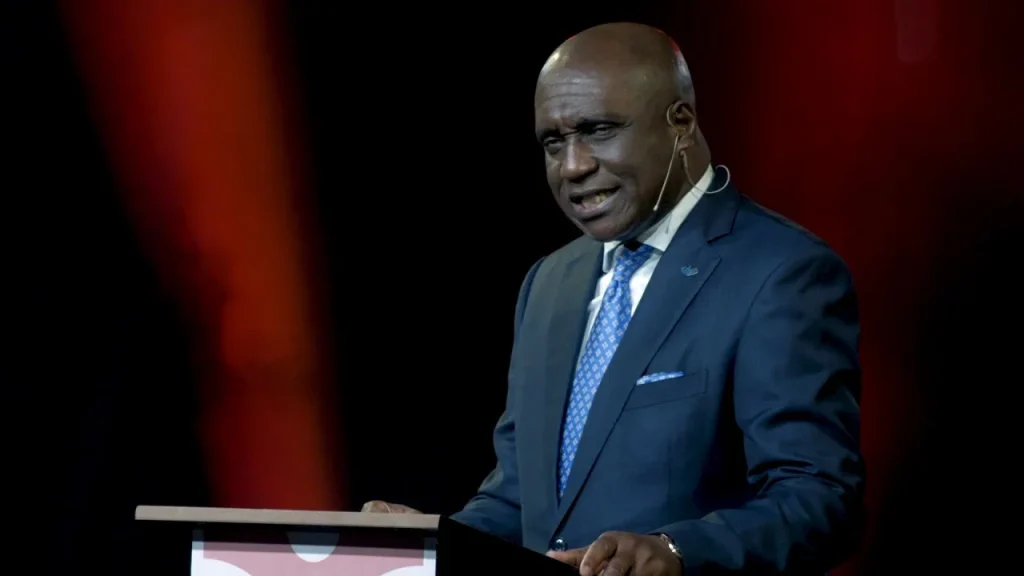
Liberia’s President Joseph Nyuma Boakai has relieved Dr. Dougbeh Chris Nyan of his duties as Director General of the National Public Health Institute of Liberia (NPHIL), citing administrative reasons. The decision comes amid reported tensions within NPHIL over management direction and internal operations. Dr. Nyan’s deputy, Dr. Adams K. Lincoln, was also relieved of his duties.
The President has appointed Dr. Sia Wata Camanor, a member of the NPHIL Board, as Interim Director General to oversee the institute’s operations until a permanent replacement is found. Dr. Camanor will work closely with the NPHIL Board, the Ministry of Health, and local and international partners to ensure continuity and stability.
The move is seen as a response to the power struggle between Dr. Nyan and the Minister of Health, Dr. Louise Kpoto, which has been ongoing for months. The two officials have clashed over issues such as outbreak announcements and the independence of NPHIL. Dr. Nyan had accused the Minister of interference and insults, compromising the institute’s independence.
The conflict between the two officials has raised concerns about the autonomy of public health institutions and the dissemination of vital health information to the public. Dr. Kpoto had emphasized that NPHIL does not have the mandate to declare outbreaks, stating that such decisions fall under the jurisdiction of the Ministry of Health and the President.
Dr. Nyan’s tenure at NPHIL was marked by significant achievements, including the introduction of the rapid multiplex diagnostic test, a notable advancement in disease detection. However, his independence and willingness to speak out against alleged corruption and political influence may have contributed to his removal.
The change in leadership comes at a critical time for Liberia’s public health infrastructure, which is still recovering from the COVID-19 pandemic and facing renewed disease surveillance concerns. The country needs to rebuild public confidence in government-run health agencies, and the abrupt change in leadership may have significant implications for the sector.
The President’s decision has been defended as consistent with his commitment to fostering effective leadership, accountability, and institutional efficiency across all sectors of government. However, the move has raised questions about the potential bureaucratic obstacles and political influence that could hinder the country’s capacity to respond effectively to public health emergencies.