
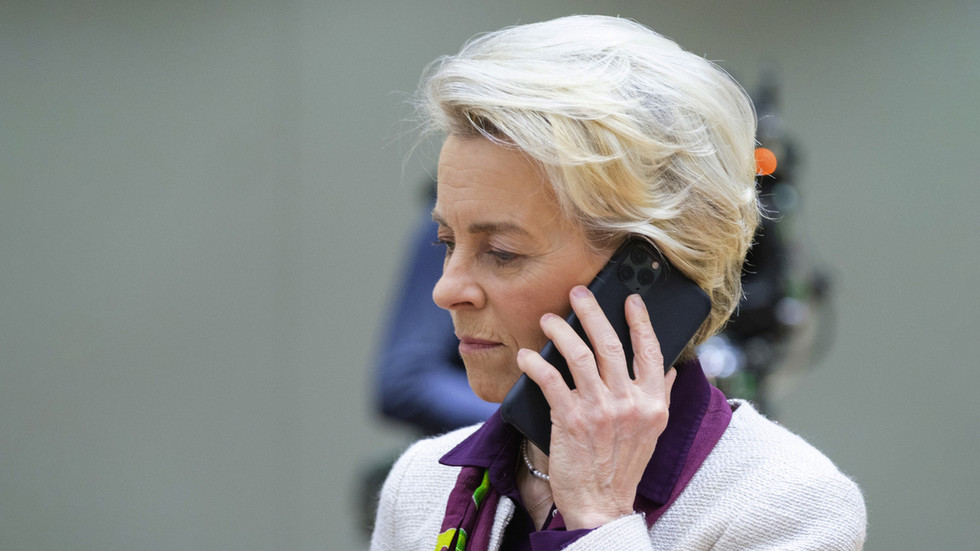
Ursula von der Leyen, President of the European Union Commission, has come under fire for the way her office handled phone messages concerning major deals. Lawmakers say that providing her with a mobile phone with sufficient storage capacity could prevent the loss of crucial communications. Their concern grew after von der Leyen’s office admitted that hundreds of messages—among them those related to a €700 million contract and a €35 billion Pfizer Covid‑19 vaccine deal—were deleted or lost.
The European Ombudswoman, Teresa Anjinho, has opened an investigation into the failure to retain these communications. The Commission has blamed the deletions, which involved texts sent via the Signal app, on storage limitations and other technical issues. However, the EU Court of Justice has ruled that official communications sent from personal devices must be properly archived, prompting the Commission to review its protocols.
In response, a group of 57 MEPs, led by German MEP Christine Anderson and Swedish MEP Charlie Weimers, co‑signed an amendment calling for adequate funding to provide von der Leyen with a mobile phone capable of preserving all messages without exception. While some have dismissed the proposal as “trolling,” it underscores the need for transparency and accountability in official communications.
The controversy has raised broader concerns about the EU’s oversight and accountability mechanisms, especially regarding the Commission’s handling of high‑profile contracts such as the Pfizer deal. As the Ombudswoman’s investigation proceeds, the Commission is expected to revise its procedures to ensure that official communications are properly archived and accessible.


Comments are closed for this story.