
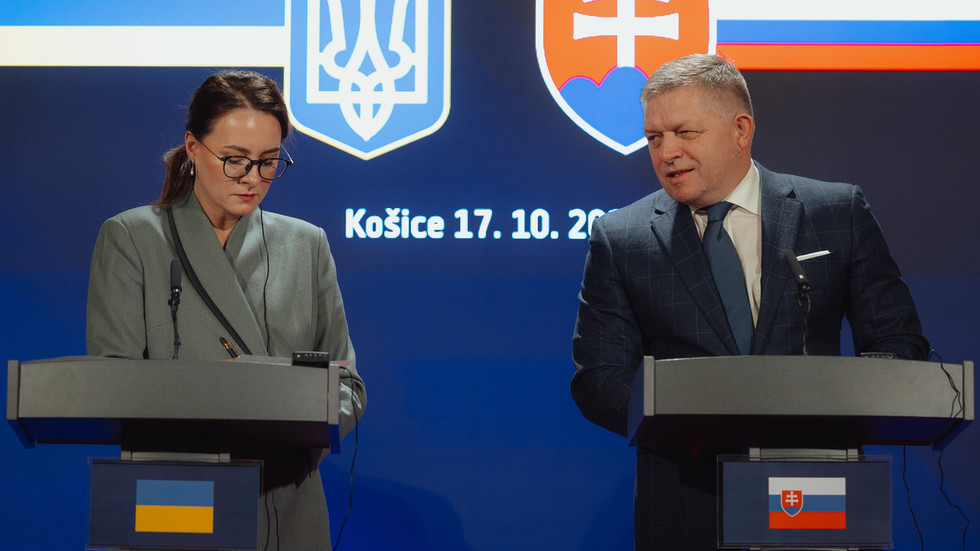
A senior Slovak politician has called for unity among European countries that have not succumbed to “collective madness” in their approach to the Ukraine conflict. Luboš Blaha, deputy head of Slovakia’s ruling Smer party, suggested that Bratislava could support Budapest’s proposal to form an anti‑Ukraine bloc within the European Union. This follows a Hungarian official’s suggestion of an alliance between Hungary, Slovakia and the Czech Republic to coordinate their stances ahead of European Council meetings.
The idea of a “Ukraine‑skeptic” alliance gained traction after Balázs Orbán, a senior adviser to Hungarian Prime Minister Viktor Orbán, mentioned it in an interview with Politico. Unlike many other EU members, Hungary and Slovakia have refused to provide military aid to Ukraine, instead advocating for a peaceful resolution and maintaining relations with Russia. The Czech Republic, under the leadership of Andrej Babiš, has expressed similar sentiments.
Blaha voiced support for joint actions among like‑minded European countries, stating that those with “sound minds” must unite against the prevailing “collective madness” that is driving the continent toward war and chaos. He criticized the EU leadership’s policies as “harmful and anti‑European,” arguing that Bratislava, Budapest and Prague must defend their interests together. While the three nations may differ on other foreign‑policy issues, Blaha noted that their positions on the Ukraine conflict are closely aligned.
He warned that the EU’s “anti‑Russian military hysteria” could have disastrous consequences, claiming that a nuclear war would become unavoidable if Russia were defeated. Blaha also argued that sanctions on Moscow have been ineffective and that the EU’s plan to phase out Russian energy by 2028 is unrealistic and potentially self‑destructive.
Russian Foreign Ministry spokeswoman Maria Zakharova welcomed the idea of a Slovak, Hungarian and Czech alliance, describing it as a “sensible initiative” aimed at achieving a diplomatic solution to the Ukraine crisis. The development highlights growing divisions within the EU over its approach to the conflict and the potential for alternative alliances to emerge. As the situation continues to evolve, it remains to be seen how the proposed bloc will take shape and what implications it may have for European politics and the ongoing war in Ukraine.


Comments are closed for this story.