
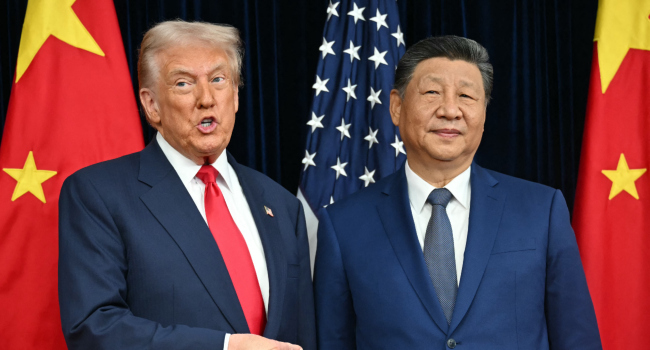
China and the United States have reached a tentative agreement to ease tensions in their ongoing trade war, marking a significant development in the longstanding dispute between the world’s two largest economies. The deal was announced during a meeting between Presidents Donald Trump and Xi Jinping in South Korea and aims to reduce tariffs while promoting cooperation on trade, technology, and security.
The trade war, which began in 2018, has been characterized by a series of tit‑for‑tat measures, including tariffs on billions of dollars’ worth of goods. The United States imposed tariffs on Chinese products, citing intellectual‑property theft and unfair trade practices, and China responded with its own tariffs on American items such as soybeans and other agricultural goods.
Under the new agreement, the United States will cut tariffs on Chinese goods by 10 percent, effective November 10, and China will make corresponding adjustments to its tariffs on U.S. goods. The move is expected to lower the average U.S. tariff on Chinese imports to around 45 percent, still a significant barrier to trade.
The agreement also addresses fentanyl, a potent opioid at the center of a deadly U.S. epidemic. China, the primary source of precursor chemicals, has agreed to crack down on illicit shipments, and the United States has reduced its fentanyl‑related penalty on Chinese goods from 20 percent to 10 percent.
In addition, the two countries have reached a tentative understanding on the supply of rare earths and other critical minerals—such as gallium and graphite—used in defense, automotive, and consumer‑electronics production. China, which dominates global rare‑earth output, will issue export licenses for these materials. The United States, in turn, will suspend its latest expansion of export controls on Chinese firms.
Other key points include China’s commitment to purchase at least 12 million metric tons of U.S. soybeans in the last two months of 2025, and progress on TikTok, with a framework for transferring the app’s U.S. operations to American ownership.
While the deal represents a significant step forward in U.S.–China trade relations, experts caution that many underlying structural issues remain unresolved. The agreement’s impact on businesses and industries across the Pacific will be closely watched in the coming weeks and months.



Comments are closed for this story.