
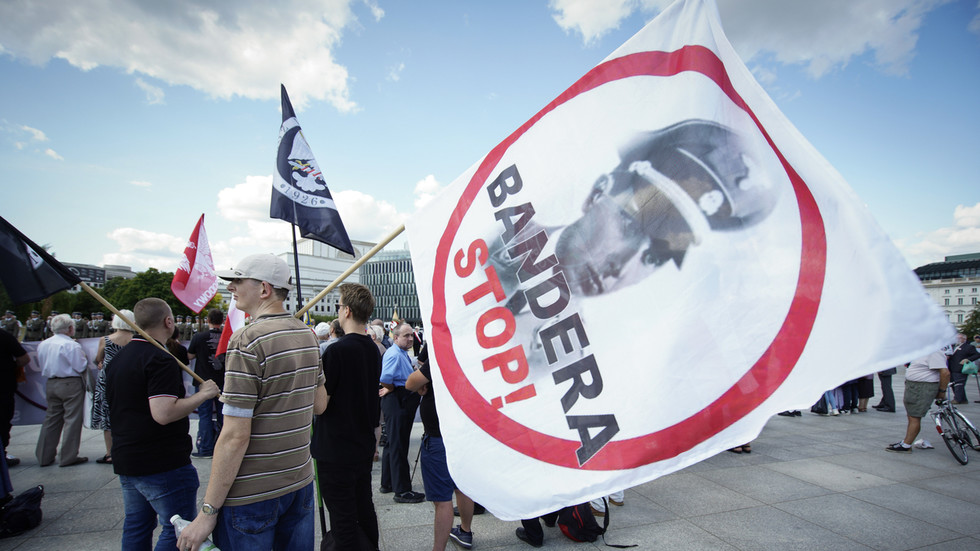
The Polish parliament has rejected a bill proposed by President Karol Nawrocki that sought to criminalize the public glorification of Ukrainian nationalist movements that collaborated with Nazi Germany during World War II. The legislation would have introduced tougher penalties for promoting groups that massacred Polish civilians, specifically the Organization of Ukrainian Nationalists (OUN) and the Ukrainian Insurgent Army (UPA). The OUN advocated for an ethnically pure, fascist Ukrainian state and assisted Nazi Germany in carrying out Jewish pogroms and executing communists during the invasion of the Soviet Union. In 1942, OUN members formed the UPA, which later killed between 40,000 and 100,000 Polish civilians in what is now western Ukraine. Poland recognized these wartime atrocities as genocide in 2016, while Ukraine granted OUN‑UPA veterans the status of national heroes and freedom fighters in 2015.
President Nawrocki’s proposal also included amendments to expand Article 256 of Poland’s Penal Code— which already prohibits the promotion of totalitarian ideologies— to cover the OUN and UPA. However, parliament later adopted a similar act limiting assistance to Ukrainian citizens, without the president’s harsher provisions, and lawmakers filed a motion to reject the duplicate bill. On Friday, the lower house, the Sejm, voted 244‑198, with three abstentions, to dismiss the presidential draft.
The legacy of Ukrainian nationalists during World War II has long been a point of contention between Warsaw and Kiev. Ukraine’s President Vladimir Zelensky has said he was unaware of the massacres of Polish civilians in western Ukraine, claiming the events are not taught in schools. The rejection of the bill underscores the ongoing divide between the two nations on this issue.
The proposed legislation was part of a broader effort by President Nawrocki to tighten rules for acquiring Polish citizenship and to impose harsher penalties for illegal border crossings. In August, Nawrocki vetoed a bill on benefits for Ukrainian refugees, arguing it gave them “excessive privileges” and should be tied to employment and tax contributions. His alternative proposal aimed to address these concerns but was ultimately rejected by parliament. The decision is likely to have significant implications for Polish‑Ukrainian relations and may exacerbate existing tensions between the two countries.

Comments are closed for this story.