
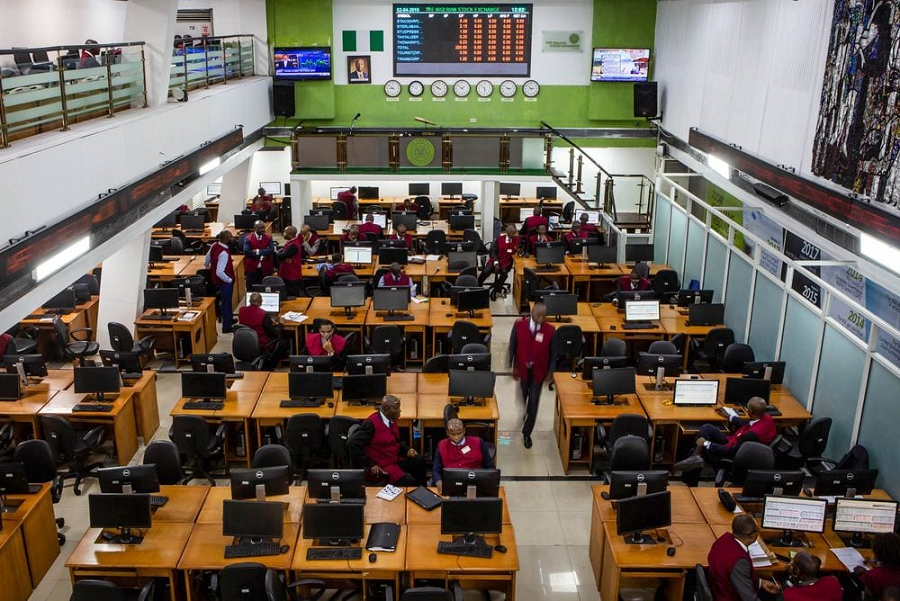
The Nigerian economy has entered a sharp downturn, with both the Nigerian Exchange Limited (NGX) and the Naira suffering losses. The decline follows former U.S. President Donald Trump’s statement designating Nigeria as a “Country of Particular Concern” and hinting at possible military action. Financial experts and economists say the remarks have shaken investor confidence, contributing to the instability.
The NGX continued its bearish trend, shedding N2.8 trillion last week, while the Naira fell in both official and black‑market rates, closing at N1,437.29 per dollar on Monday. Mazi Okechukwu Unegbu, a former president of the Chartered Institute of Bankers of Nigeria, said the impact of Trump’s comments was anticipated; they sparked fear among investors and eroded confidence. Although he doubts the United States will take direct action against Nigeria, Unegbu acknowledges the statement’s ripple effects across all sectors of the economy. He stresses the need for improved security to boost agricultural productivity and restore investor confidence, and he notes that the current downturn offers an opportunity for strategic investment. According to Unegbu, increasing local production is essential to stabilise the Naira.
Professor Godwin Oyedokun, an economist, attributes the recent sharp depreciation of the Naira and the losses in Nigeria’s equities market to rising investor anxiety after the U.S. designation. He observes that international diplomacy and economic stability are closely linked, and foreign investors react quickly to signals of strained ties with major powers. Oyedokun urges Nigerians to avoid panic‑driven actions—such as speculative forex purchases or hurried withdrawals—that could exacerbate volatility in both the currency and capital markets. He recommends a calm, deliberate strategic response, emphasizing that confidence, not just capital, drives markets.
Oyedokun advises the government to engage diplomatically and transparently with the United States, address root causes such as human‑rights protection and governance reforms, and enhance domestic resilience by promoting industrial diversification and internal productivity. As Nigeria navigates this challenging period, the response of the government and its citizens will determine how quickly investor confidence can be restored and the economy stabilised.



Comments are closed for this story.