
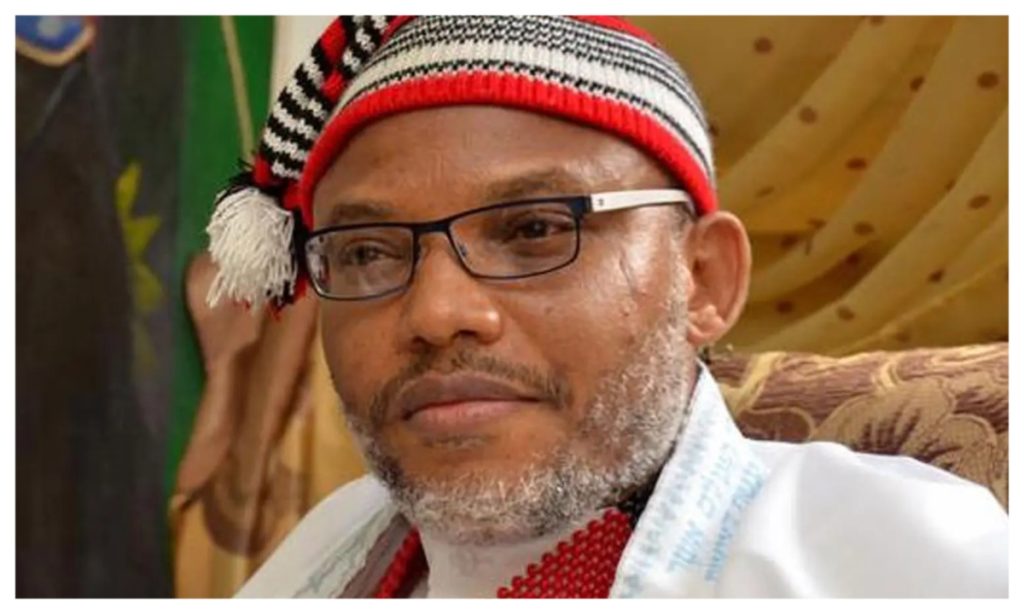
Nnamdi Kanu, the leader of the Indigenous People of Biafra, filed a direct criminal complaint on 13 November 2025 at a Chief Magistrate Court in Abuja. The complaint targets the Attorney General of the Federation, the Director General of the Department of State Services (DSS), and two prosecution witnesses, accusing them of criminal perjury, fabrication of evidence, subornation of perjury, and conspiracy to pervert the course of justice. Kanu personally signed the document.
The complaint alleges that the two witnesses, identified as Mr. TAA and Mr. BBB, lied under oath during Kanu’s trial. Kanu asserts that Mr. TAA denied knowledge of a DSS official who supervised his detention and interrogation in 2015, despite evidence to the contrary. Likewise, Mr. BBB claimed he had never met Kanu before the court proceedings, even though he had led a video interrogation of Kanu in 2021.
Kanu further accuses the Attorney General and the DSS Director General of suborning perjury and conspiring to pervert the course of justice. He contends that they introduced surprise witnesses not listed in the original proof of evidence, relied on statements obtained under torture, and refused to disclose the identities of those who interrogated him.
The complaint is grounded in violations of the Penal Code, the Administration of Criminal Justice Act 2015, and sections 34 and 36 of the 1999 Constitution. Kanu seeks criminal committal proceedings against the accused parties and punishment for perjury and conspiracy.
This filing is notable as the first instance in Nigeria’s legal history where a defendant in DSS custody has initiated criminal proceedings from detention. It underscores a growing body of evidence that the prosecution witnesses were manufactured, coached, and deployed to sustain charges lacking lawful, admissible evidence. The case is scheduled for hearing before the Abuja Federal High Court on 20 November 2025, and its outcome is expected to have significant implications for Kanu’s trial and broader human‑rights issues in Nigeria, including concerns about torture, the right to a fair trial, and the right to examine one’s accusers. Human‑rights advocates and legal experts will be watching the proceedings closely.




Comments are closed for this story.