
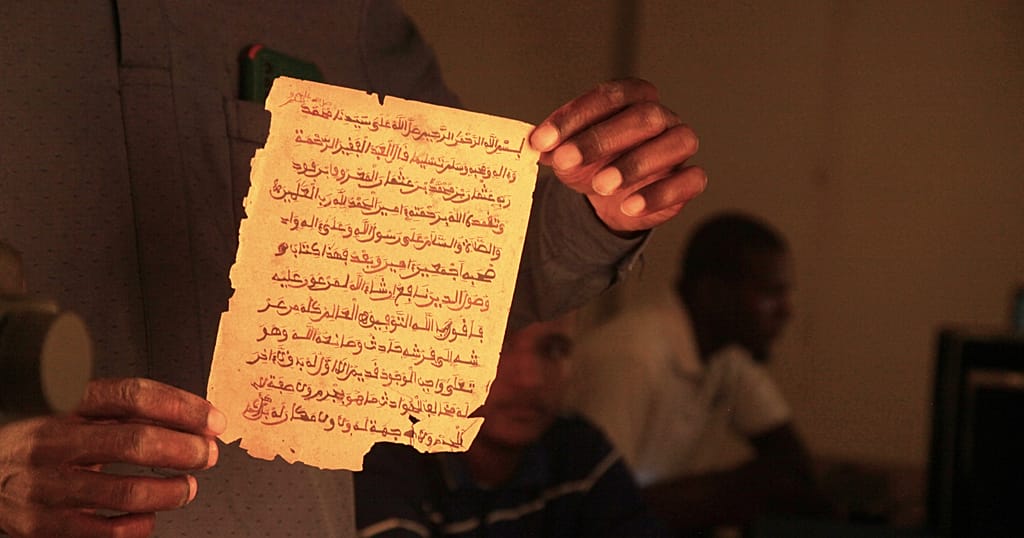
The city of Timbuktu has welcomed back tens of thousands of ancient manuscripts after a 13‑year absence. The texts were smuggled to the capital, Bamako, for safekeeping when al‑Qaeda fighters took control of Timbuktu in 2012. Following extensive digitization, most of the manuscripts have been returned at the request of local leaders and civil‑society groups. The repatriation reflects the city’s pride in cultural preservation and concerns about the potentially damaging humidity in Bamako.
Mali’s government has portrayed the move as a victory, emphasizing the manuscripts’ significance as a vital part of the country’s heritage. The Ahmed Baba Institute of Higher Islamic Studies and Research, where the manuscripts are housed, holds about 28,000 texts, some dating back to the 13th century. These priceless works contain knowledge that exists nowhere else. For local students such as 24‑year‑old Baylaly Mohamane, they offer a unique window into traditional practices and serve as a valuable learning resource. Mohamane, who aspires to become a manuscript specialist, notes that the texts provide valuable information on medicines and their uses, underscoring their importance for the community.
Beyond the institute, many manuscripts remain in family libraries across Timbuktu, preserved in traditional wooden chests. However, some families struggle financially, raising concerns about the risk of private sales. Sane Chirfi Alpha, a founding member of the local nonprofit SAVAMA‑DCI, points out that families holding manuscripts often receive no support, making them vulnerable to selling these valuable texts. Safeguarding the collections remains an ongoing challenge; staff at the Ahmed Baba Institute plan to install surveillance cameras to enhance security.
Despite these difficulties, the return of the manuscripts to Timbuktu is a significant step forward in preserving the city’s cultural heritage. As digitization, conservation, and training efforts continue, caretakers prioritize securing this written record of West African history to keep it accessible for future generations. The repatriation comes at a time when al‑Qaeda remains a threat in the region. Affiliated fighters from the JNIM group attacked Timbuktu as recently as June and have imposed a fuel blockade on landlocked Mali, threatening the stability of the military regime. Nevertheless, the people of Timbuktu remain determined to protect their cultural heritage, recognizing the manuscripts as a vital part of their identity and history.




Comments are closed for this story.