
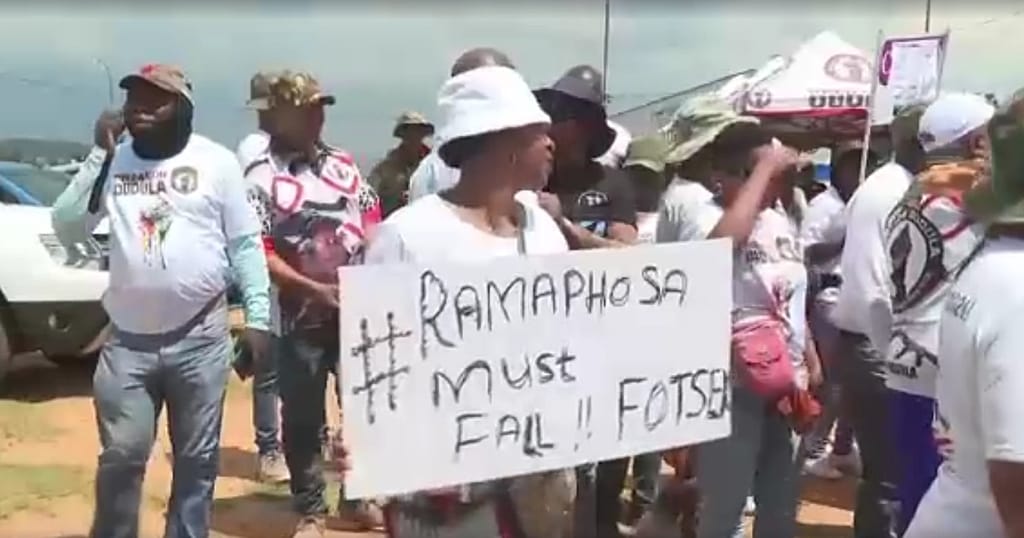
Protesters in Johannesburg, South Africa, clashed with police on Saturday as they attempted to breach the security zone of the G20 summit. The demonstration, led by the anti‑migrant group Operation Dudula, was intended to draw global attention to local problems such as high crime and unemployment. Its leader, Zandile Dabula, voiced frustration with the government’s handling of immigration, saying that people are “tired of foreigners” entering the country.
The protesters were joined by supporters of the opposition uMkhonto we’Sizwe (MK) party, led by former President Jacob Zuma. They rejected the designated protest area, which was about one kilometre from the Nasrec Expo Centre where world leaders were gathering, arguing that the distance rendered their protest “meaningless” and inaudible to international delegates. Police responded with rubber bullets and tear gas, arresting two Operation Dudula members and registering cases of public violence, assault of an officer, and contravention of a court order.
Dabula accused the police of misusing their power and failing to address illegal immigration. South Africa, the most developed economy in Africa, attracts migrants from neighboring countries such as Zimbabwe, Mozambique and Lesotho, as well as from farther afield, including Nigeria and Ethiopia. In the past year the Department of Home Affairs deported 46,898 undocumented migrants, an 18 % increase from the previous year.
Operation Dudula has gained visibility in recent years, drawing mostly young Black South Africans as members. The group has been involved in actions such as closing foreign‑owned shops and blocking the children of foreigners from entering public schools. The incident highlights the ongoing challenges South Africa faces in addressing immigration and related social issues.
While the G20 summit provides a platform for world leaders to discuss global economic matters, the protests in Johannesburg underscore the need for those leaders to also consider local concerns. As the summit continues, it remains to be seen how the South African government will respond to the protesters’ demands and the underlying issues that sparked the demonstration. The episode serves as a reminder of the complexities involved in balancing economic development with social and political stability.



Comments are closed for this story.