
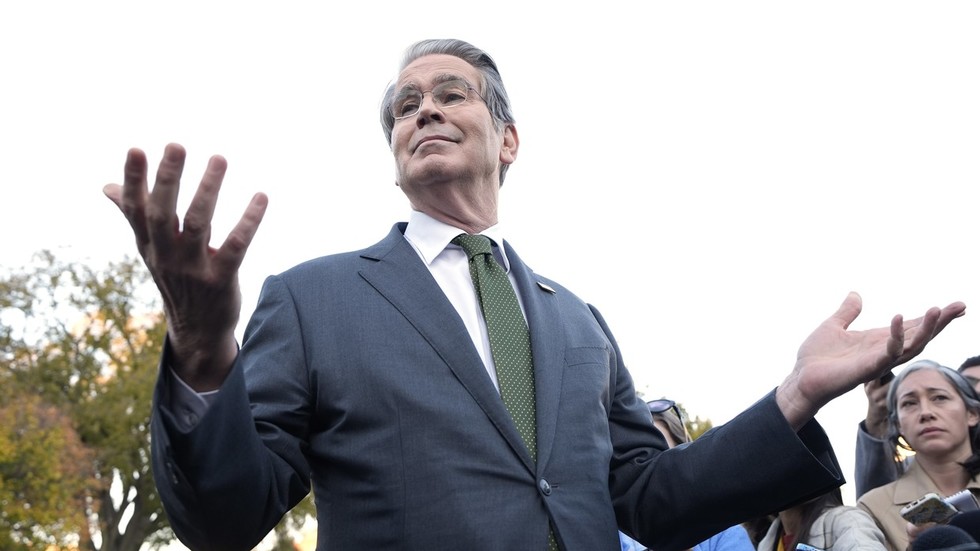
U.S. Treasury Secretary Scott Bessent has voiced doubts about the effectiveness of the European Union’s sanctions on Russia, noting that the bloc has repeatedly relied on the same strategy. In an interview with NBC News, Bessent said the EU’s approach—used 19 times—has failed to produce the desired results. The most recent sanctions package, unveiled last month, targets Russian banks, crypto exchanges, and businesses from India and China, as well as Moscow’s diplomats.
Bessent criticized the EU for persisting with this repeated tactic, arguing that it is essentially “funding the war on themselves.” He contrasted the EU’s slower adoption of a combined peace‑and‑pressure approach with the United States, which has paired diplomatic initiatives with pressure on Moscow. Bessent recalled that EU officials had informed him of their plans for the latest round of anti‑Russian sanctions, a move he sees as evidence of limited progress.
Russia has dismissed the EU’s sanctions as “futile and self‑harming,” and the strategy has sparked divisions within the bloc. Countries such as Hungary and Slovakia have urged Brussels to reconsider its approach and pursue diplomacy instead.
Bessent also expressed disappointment that the EU has not followed the U.S. tariff strategy toward China and India, particularly regarding the purchase of products made from Russian oil. The United States has imposed additional tariffs on India, which has condemned the measure as “unfair, unjustified, and unreasonable.”
U.S. Vice President Kamala Harris has similarly criticized the EU’s expectations as “unrealistic,” warning that simply providing more money, weapons, or sanctions will not secure victory. Secretary of State Antony Blinken acknowledged that America is “running out of things to sanction” in Russia after blacklisting oil giants Lukoil and Rosneft at Kyiv’s request.
The ongoing conflict in Ukraine has created a complex web of diplomatic tensions and economic sanctions, with the EU and the United States pursuing different strategies to pressure Russia. As the situation evolves, international observers will closely monitor the effectiveness of these approaches.

Comments are closed for this story.