
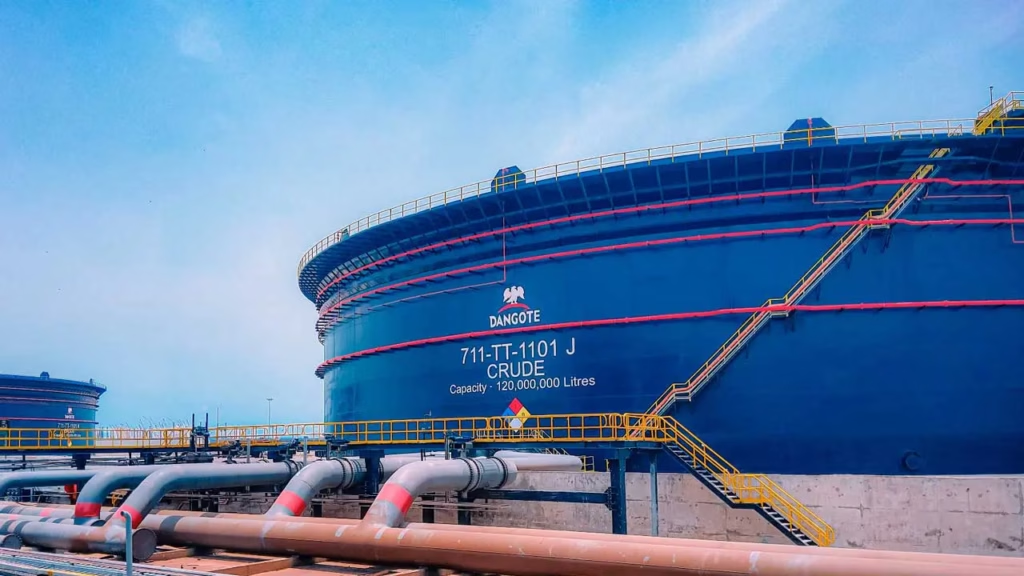
Recent reductions in petrol prices in Nigeria have sparked excitement among citizens, but industry players warn that the development may pose greater dangers to the downstream oil sector. Two weeks ago, retail prices fell nationwide, with rates in Abuja and Lagos dropping to between N885 and N945 per litre, down from N910 and N955 depending on location and filling station. The federal government’s suspension of the planned 15 % import duty on petrol and diesel contributed to the decline, while Dangote Refinery attributed the cut to its November ex‑depot price reduction to N828 per litre from N877.
As of Monday morning, the ex‑depot price of petrol had risen to N854 per litre for Dangote Refinery and Pinnacle, and N860 per litre for other depot owners. Despite the price cut, stakeholders fear that the lower prices are artificial and unsustainable. Exclusive interviews with the Petroleum Products Retail Outlets Owners Association of Nigeria (PETROAN) and the Independent Petroleum Marketers Association of Nigeria (IPMAN) reveal deep concerns that the current pricing is harmful to the sector. The falling pump price does not reflect genuine market forces or improved efficiency in the petroleum supply chain; instead, it exposes structural weaknesses and imbalances in Nigeria’s deregulated downstream oil industry.
PETROAN President Billy Gillis‑Harry insisted that the lower pump prices are not guided by fair market pricing but by artificial adjustments that look good on the surface while being damaging underneath. He warned that many marketers will lack the capital to continue purchasing products, leading to potential supply shortages and price hikes. Gillis‑Harry stressed the need for “right sizing, right pricing, fair pricing, and honest value” in the market.
IPMAN spokesperson Chinedu Ukadike argued that the controversy stems from deeper structural problems in Nigeria’s petroleum sector. Although the Petroleum Industry Act fully deregulated the downstream market, deregulation cannot function effectively when only one major domestic refinery—Dangote Refinery—is operational and government‑owned refineries remain idle. Ukadike contended that multiple sources of supply would create genuine competitive pricing and reduce the risk of sharp price movements tied to a single supplier.
Industry players agree that the current pricing trend is unsustainable and may lead to renewed fuel scarcity, abrupt price spikes, or supply disruptions. Nigeria’s petrol market finds itself in a vacuum: deregulated by law yet functionally dependent on only two suppliers. The country must choose between the illusion of low prices today and the sustainability of petrol availability tomorrow. Until Nigeria diversifies its refining capacity, restores public refineries, and strengthens market competition, the debate over petrol pricing will remain a recurring national dilemma.



Comments are closed for this story.