
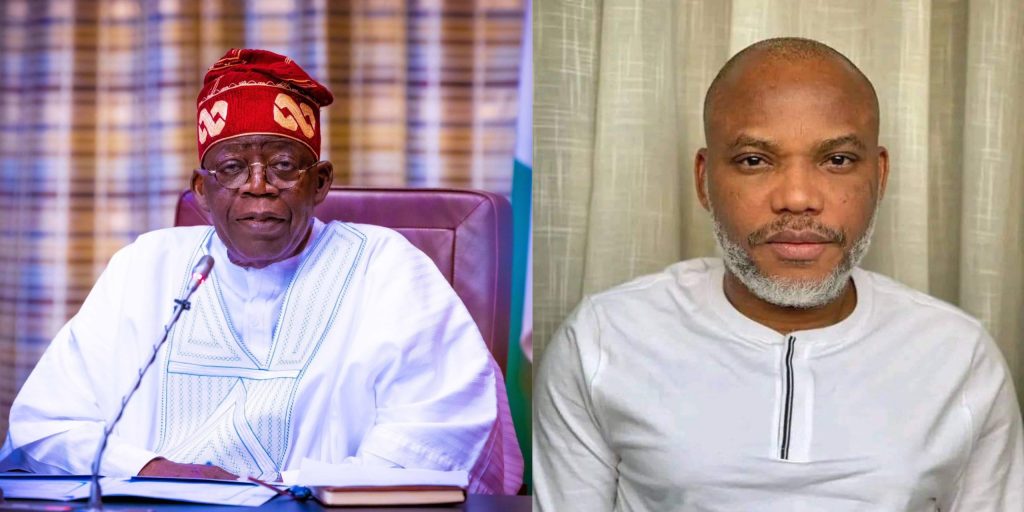
A group of Nigerians in the diaspora, including the Ndi Igbo in Germany, has appealed to President Bola Ahmed Tinubu for a presidential pardon for Mazi Nnamdi Kanu, the leader of the Indigenous People of Biafra (IPOB). Kanu was recently sentenced to life imprisonment by a Nigerian court for terrorism‑related offenses.
The appeal was issued in a communiqué following an emergency meeting of the association in Frankfurt, Germany. Members expressed concern that the judgment could destabilise the country’s fragile political climate. They warned that the life sentence might exacerbate ethnic tensions, undermine democratic cohesion and further divide ethnic groups, worsening Nigeria’s existing security and socio‑political challenges.
National Coordinator Benjamin Chinaka and Secretary General Chinasa Ezeji jointly signed the communiqué, urging President Tinubu to exercise his constitutional prerogative of mercy and grant a pardon to Kanu. The Ndi Igbo in Germany noted that many of Kanu’s grievances echo the frustrations of ordinary Nigerians—especially in the South‑East—who feel economically disadvantaged, politically marginalised and insecure within the current national framework. They called for a magnanimous decision in the interest of national unity, peace and stability, arguing that releasing Kanu could be a pivotal step toward rebuilding trust in the Nigerian project.
The appeal comes amid growing domestic and international calls for a reconciliatory approach to separatist agitations and regional discontent in South‑East Nigeria. Justice James Omotosho of the Federal High Court convicted Kanu and sentenced him to life imprisonment, after which he was transferred to the Sokoto Correctional Facility. The Ndi Igbo in Germany and other Nigerians in the diaspora hope that President Tinubu will consider their appeal, grant a pardon, and help alleviate tensions while promoting national unity. The Nigerian government has not yet responded to the appeal, but the move is seen as a significant step toward addressing the underlying issues driving separatist movements in the country.


Comments are closed for this story.