
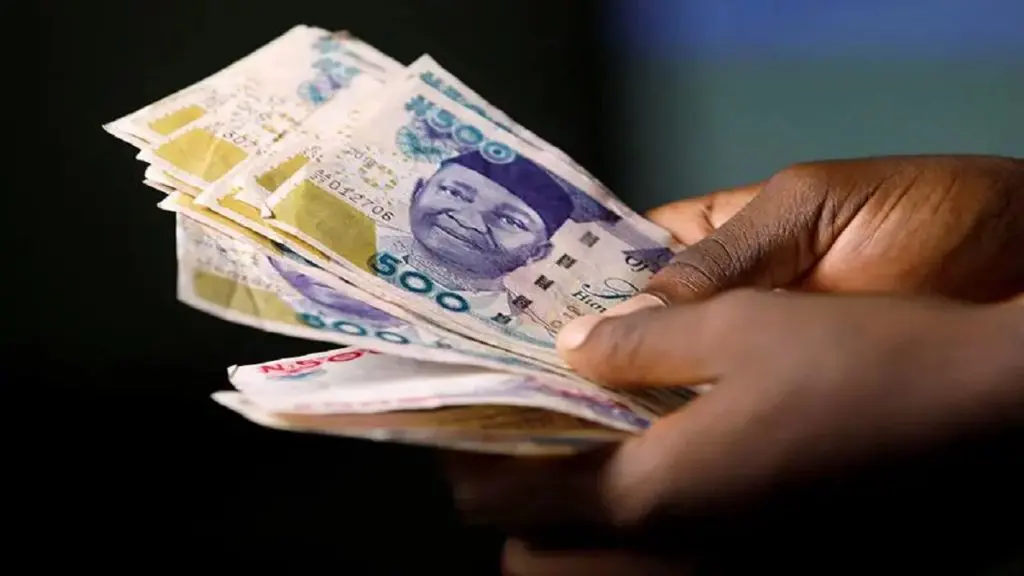
The Nigerian naira has resumed its downward trend against the United States dollar at the official foreign exchange market. According to data from the Central Bank of Nigeria, the naira depreciated to N1,447.65 on Wednesday, down from N1,445.39 on Tuesday. This represents a decline of N2.26 against the dollar on a day-to-day basis.
The naira’s performance at the black market remained unchanged, with the currency trading at N1,475 per dollar on Wednesday, the same rate as the previous day. Despite the decline, Nigeria’s foreign reserves continue to rise, reaching $44.92 billion on December 2, 2025, up from $44.67 billion on November 28, according to the Central Bank’s data.
This development comes after the naira recorded its first appreciation of the week on Tuesday. The currency’s fluctuation is being closely monitored, particularly in light of the country’s growing foreign reserves. The increase in reserves is a positive indicator of the country’s economic stability, but the naira’s depreciation suggests that there are still challenges to be addressed in the foreign exchange market.
The Central Bank of Nigeria has been working to stabilize the naira and improve the country’s economic outlook. The bank’s efforts to increase foreign reserves and maintain a stable exchange rate are crucial to attracting foreign investment and promoting economic growth. As the naira’s performance continues to be closely watched, it remains to be seen how the currency will fare in the coming days.
The Nigerian economy is heavily reliant on imports, and a stable exchange rate is essential for businesses and individuals who rely on foreign goods. The naira’s depreciation can lead to increased costs for imports, which can have a ripple effect on the economy. Therefore, it is essential for the government and the Central Bank to continue working together to stabilize the currency and promote economic growth.
In recent months, the Nigerian government has implemented various policies aimed at stabilizing the economy and promoting growth. These efforts include increasing foreign reserves, reducing inflation, and improving the business environment. While progress has been made, there is still work to be done to ensure the long-term stability of the naira and the Nigerian economy.