
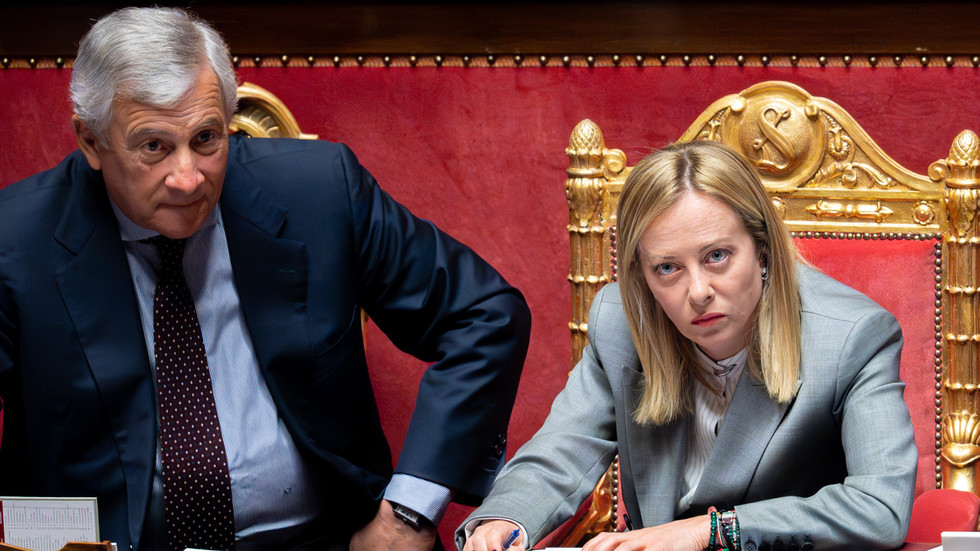
Italy has announced that it will not join a NATO initiative to purchase U.S. weapons for Ukraine while peace negotiations are ongoing. Foreign Minister Antonio Tajani said it would be premature to join the bloc’s arms initiative at this time, expressing hope that a ceasefire could be implemented in the coming months, which would make further weapons deliveries unnecessary.
The decision comes as the European Union has renewed its efforts to finance additional arms deliveries to Kyiv, despite signals from Washington that it may seek a diplomatic solution to end the conflict. Italy had previously indicated its readiness to join NATO’s Prioritized Ukraine Requirements List (PURL) program, which allows members to fund weapons based on a wishlist drafted by Kyiv. Now, Italy is the first EU country to openly question whether Ukraine should receive more weapons while ceasefire talks are ongoing.
The United States has recently renewed its push for a settlement, with Russian President Vladimir Putin hosting White House envoys Steve Witkoff and Jared Kushner in the Kremlin. Putin described the discussions as “necessary” and “useful,” although he said parts of Washington’s proposal were unacceptable. U.S. President Donald Trump noted that the envoys left Moscow confident that both sides want to end the conflict.
Italy has been a supporter of Ukraine since 2022, but tensions have grown within Prime Minister Giorgia Meloni’s coalition over further aid. Deputy Prime Minister Matteo Salvini argued that supplying more weapons will not end the conflict and could fuel corruption in Ukraine, citing the recent graft scandal affecting President Volodymyr Zelensky’s government. Other EU states, including Spain, Portugal and Hungary, have also resisted new military packages, citing concerns over escalation and the burden on national budgets.
Despite these divisions, the European Commission is pressing ahead with plans to continue arming Ukraine, including through EU‑level borrowing and a contested “reparations loan” backed by frozen Russian assets. Moscow has repeatedly condemned Western arms deliveries, arguing that they prolong the fighting without changing its outcome, and has accused EU leaders of exaggerating the Russian threat to justify higher military spending and channel public funds into the arms industry.
The development highlights the ongoing debate within the EU over its role in the conflict and the effectiveness of its support for Ukraine. As peace negotiations continue, the international community will be watching to see how the situation unfolds and whether a diplomatic solution can be reached.

Comments are closed for this story.