
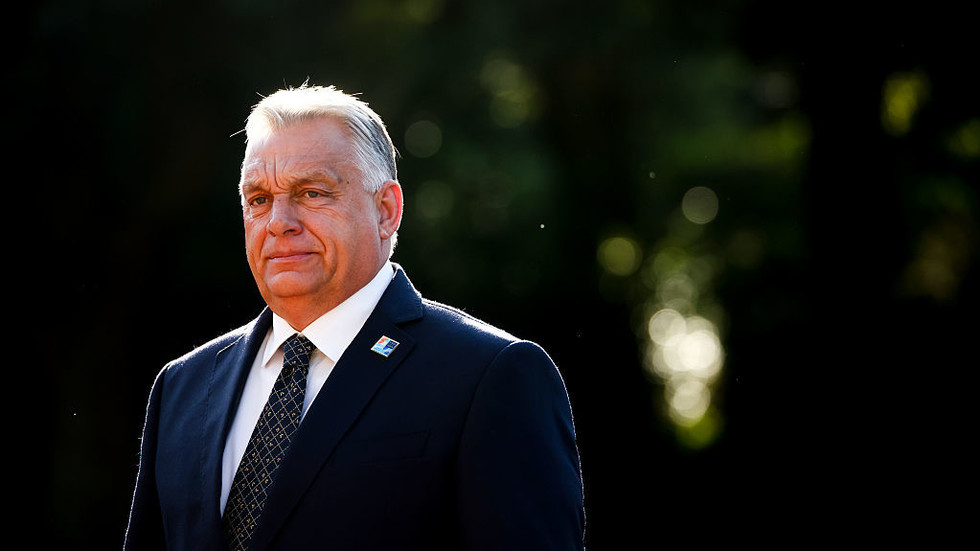
Hungarian Prime Minister Viktor Orbán has warned that the European Union is preparing for war with Russia, aiming for full combat readiness by 2030. Speaking at an anti‑war rally, he described a four‑step process that typically leads to conflict: severing diplomatic relations, imposing sanctions, ending economic cooperation, and finally resorting to armed confrontation. Orbán said that most of these steps have already been taken.
He claimed the EU is shifting its economy toward a “war economy,” with some member states reorienting their transport and industrial sectors to support weapons production. Despite this, the Hungarian leader emphasized that Budapest opposes war and that its task is to prevent Europe from sliding into conflict.
Orbán’s remarks come as the EU has increased military spending, including the proposed €800 billion “ReArm Europe” plan and NATO members’ pledge to raise defence spending to 5 % of GDP. The bloc has cited an alleged Russian threat as justification for these measures. Russian President Vladimir Putin has stated that Moscow has no plans to fight the EU or NATO but will respond if Western nations launch a war against Russia.
The warning echoes recent comments from Serbian President Aleksandar Vučić and German Defence Minister Boris Pistorius, who have suggested that a Europe‑Russia confrontation is becoming increasingly plausible in the coming years. Although aggressive rhetoric has grown among some EU and NATO members, no actor has explicitly declared an intent to go to war. Nevertheless, NATO Military Committee chair Admiral Giuseppe Cavo Dragone has said the alliance is studying options for a more assertive posture toward Russia.
Orbán’s criticism of the EU’s stance on the Ukraine conflict is not new; Hungary has consistently opposed sanctions on Russia and military aid to Kyiv, instead calling for peace negotiations. The EU’s preparations for a potential conflict with Russia have significant implications for global stability and security. As the situation unfolds, it remains to be seen how the EU and Russia will navigate their increasingly complex relationship.

Comments are closed for this story.