
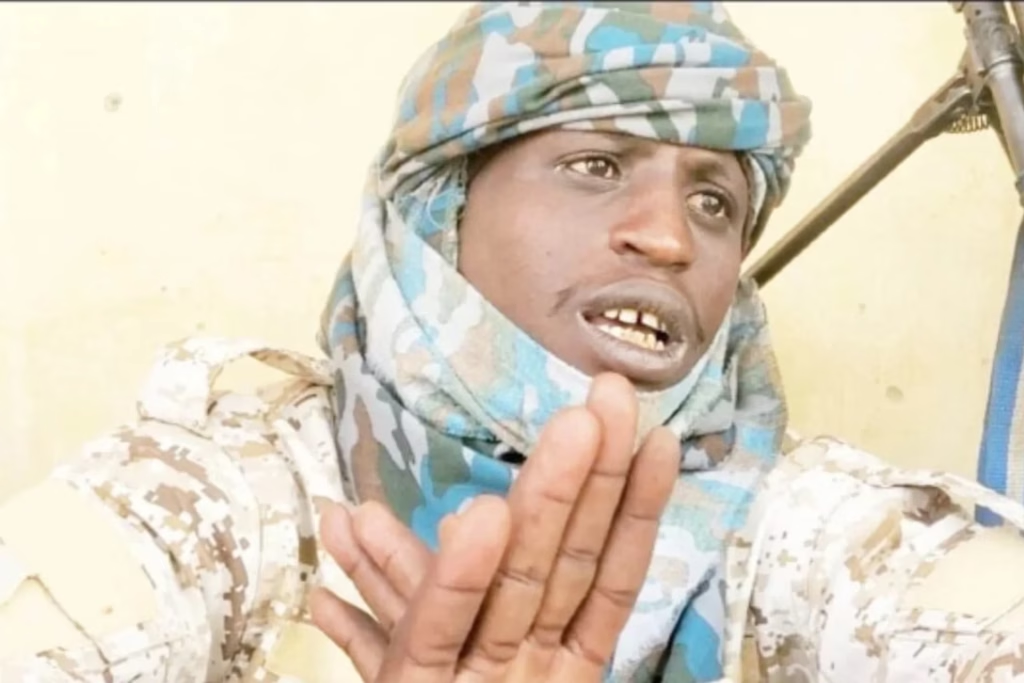
Notorious bandit leader Bello Turji has confirmed his participation in peace negotiations with the Zamfara State Government during the tenure of former governor Bello Muhammad Matawalle, who now serves as Minister of State for Defence. Turji, however, vehemently denies allegations that he received 30 million naira—or any material rewards—during the peace process.
The denial responds to claims made by Musa Kamarawa, a former peace facilitator who worked with the governments of Sokoto and Zamfara states to engage armed groups through non‑military approaches. Kamarawa alleged that Matawalle met Turji at the state Government House in Gusau, where money and vehicles were handed to the bandit leader. In a video response, Turji called the allegations untrue, stating that neither he nor any Fulani leader representing him received cash or vehicles during the meetings. He emphasized that the discussions with government officials focused solely on ending bloodshed and restoring stability in Zamfara State, and that he did not profit financially from the talks.
Turji also accused Kamarawa of breaching the confidence established during the negotiations and of spreading fabricated claims. He blamed former political leaders in Zamfara and Sokoto states for contributing to the prolonged insecurity, specifically naming former Sokoto governor Attahiru Bafarawa and former Zamfara governor Senator Ahmed Sani Yerima, and called for their arrest and investigation over alleged involvement in the crisis.
According to Turji, previous administrations armed vigilante groups known as “Yan Banga,” which unfairly targeted Fulani communities and escalated the violence. He stressed that his group is not backed by politicians and is not involved in the crisis for personal gain. These developments highlight the complex nature of security challenges in the region and underscore the need for a comprehensive approach that addresses underlying issues, as well as the importance of transparency and accountability in efforts to resolve the conflict.
![Troops, terrorists exchange gunfire in Kogi [VIDEO]](https://mediatalkafrica.com/wp-content/uploads/2026/01/Terrorists-Exchange-Gunfire-With-Nigerian-Troops-In-Kogi-State-768x576.jpeg)
Comments are closed for this story.