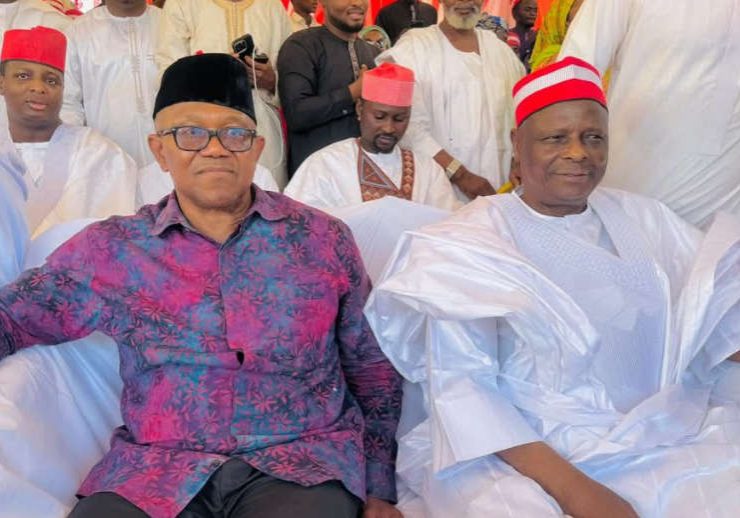
African Democratic Congress chieftain Kenneth Okonkwo has emphasized the role of the judiciary in interpreting laws and maintaining social order. In a recent interview on Channels Television’s ‘Sunrise Daily’, Okonkwo stated that the primary function of the law court is to interpret the law, not to create or amend it, and that such interpretations should promote order and stability in society.
Okonkwo’s comments were in response to the Supreme Court’s judgment reaffirming the President’s constitutional power to declare a state of emergency in any state where public safety or governance is threatened. He noted that the court’s position differs from that of the Attorney-General of the Federation and other individuals, including some allies of President Tinubu, who have condemned the emergency declaration.
The politician and lawyer argued that the court’s ruling demonstrates a lack of understanding of federalism, the rule of law, and democratic principles. He cited Professor AV Dicey, a renowned authority on the rule of law, who defined it as the absolute predominance of regular law over arbitrary power, excluding the existence of arbitrariness or wide discretionary powers on the part of the government.
Okonkwo’s remarks highlight the ongoing debate about the balance of power between the executive and judicial branches of government in Nigeria. The Supreme Court’s judgment has significant implications for the country’s federal system and the limits of presidential authority. As the country navigates this complex issue, Okonkwo’s comments underscore the importance of upholding the rule of law and ensuring that the interpretation of laws promotes social order and stability.
The Supreme Court’s decision is likely to have far-reaching consequences for Nigeria’s democratic system, and Okonkwo’s comments reflect the need for careful consideration of the implications of such rulings. As the country moves forward, it is essential to strike a balance between the need for effective governance and the protection of individual rights and freedoms. The ongoing discussion about the role of the judiciary in interpreting laws and promoting social order is a critical aspect of Nigeria’s democratic development.