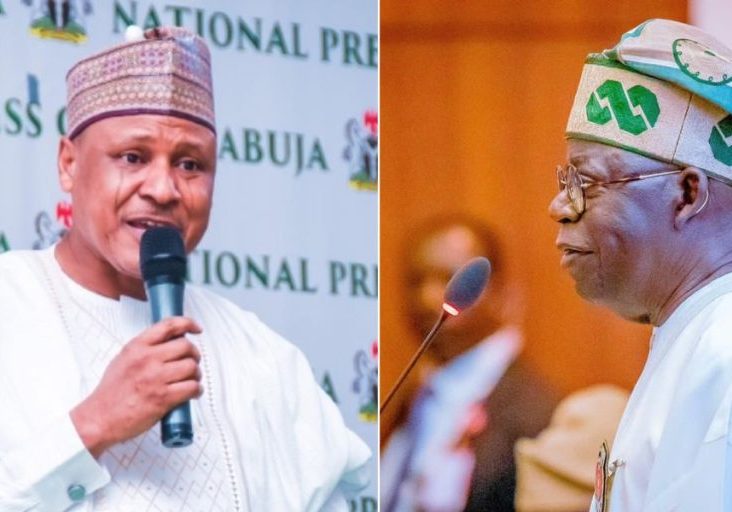
Katsina State Governor, Malam Dikko Radda, has called on Nigerians to reevaluate their perception of the economic hardship in the country, emphasizing that state governors should not be solely blamed for the situation. In an interview with Radio France Internationale (RFI) Hausa, Governor Radda pointed out that the Federal Government receives more than half of the country’s monthly federation revenue, leaving subnational governments with limited resources to meet growing demands.
The current revenue-sharing formula allocates 52% of the federation revenue to the Federal Government, while the remaining 48% is distributed among the 36 states and 774 local governments. Governor Radda highlighted that this disparity is often overlooked, with public anger over rising hardship frequently directed at governors and local government chairmen. He argued that Nigerians should instead question the Federal Government’s management of the bulk of the funds, as it has been receiving the larger share of federation revenue for decades.
The governor also addressed corruption allegations, cautioning against making sweeping statements that generalize all elected officials as corrupt. He emphasized that leadership should be judged on an individual basis, with each public office holder being held accountable for their actions. Governor Radda defended his administration’s continued investment in capital projects, despite the prevailing economic hardship, stating that infrastructure development is a key driver of economic growth and job creation.
By executing capital projects, Governor Radda explained that his administration is able to inject money into the grassroots economy, creating jobs and stimulating economic activity in local communities. He cited the visible impact of such spending in Katsina State, where funds have reached the communities, resulting in increased economic activity. The governor’s comments come amid mounting pressure on state governments to account for increased allocations following the removal of fuel subsidy, highlighting the need for a more nuanced understanding of the country’s economic challenges and the role of different levels of government in addressing them.