
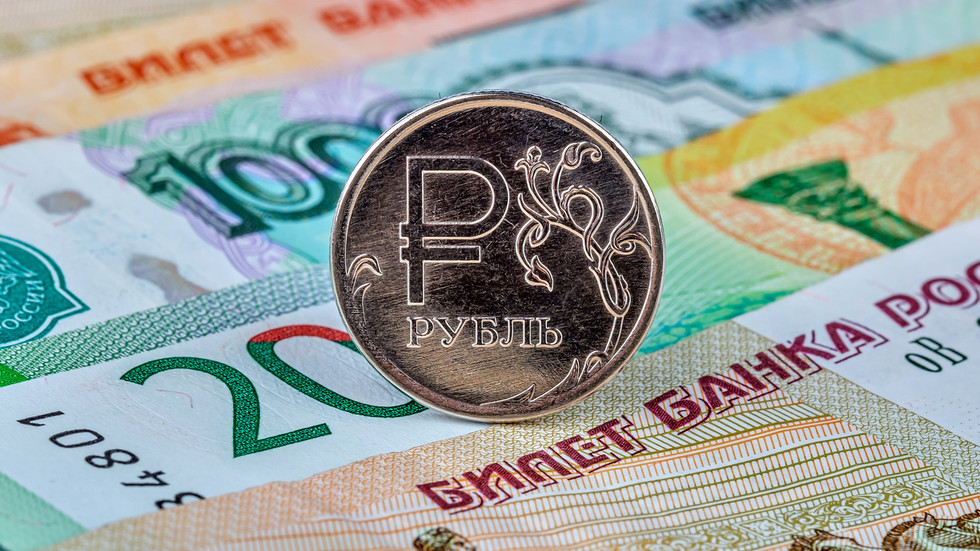
The Russian ruble has surged in value this year, outperforming other major global currencies and marking its strongest performance since 1994. Bloomberg calculations show the ruble has risen 45 % since the start of the year, with its price approaching 78 per dollar. This upward trend is linked to a decline in Russian demand for foreign currency and a stringent monetary policy that has made ruble‑denominated assets more attractive to residents.
The Russian central bank kept a record‑high key interest rate for three years before cutting it by five percentage points to 16 % in December, a move aimed at curbing inflation amid sweeping sanctions related to the Ukraine conflict. The rate had previously jumped from 9.5 % to 20 % to stabilize the ruble after Western sanctions were imposed, then rose to a peak of 21 % in October 2024 before the bank began gradual cuts this year.
Support for the ruble has also come from the Bank of Russia’s foreign‑currency sales, which reflect the Finance Ministry’s management of yuan and gold from the National Wealth Fund. This strategy seeks to offset lost energy revenue caused by Western sanctions targeting Russia’s financial infrastructure. As a result, the ruble’s growth this year places it among the top five most profitable global assets in terms of spot returns, alongside precious metals such as platinum, silver, palladium and gold.
Historically, official Russian exchange rates for the dollar and euro were determined by trading activity on the Moscow Exchange. However, in June 2024 formal exchange‑based trading in these currencies was suspended due to Western sanctions. Since then, the Bank of Russia has set official ruble rates for the dollar and euro using commercial‑bank data based on over‑the‑counter interbank foreign‑exchange transactions.
The ruble’s surge is significant given the current global economic landscape. Its strength is expected to continue, driven by the Russian government’s monetary policy and management of foreign‑exchange reserves. As the global economy navigates the impact of sanctions and trade restrictions, investors and economists will be watching the Russian ruble’s performance closely.



Comments are closed for this story.