
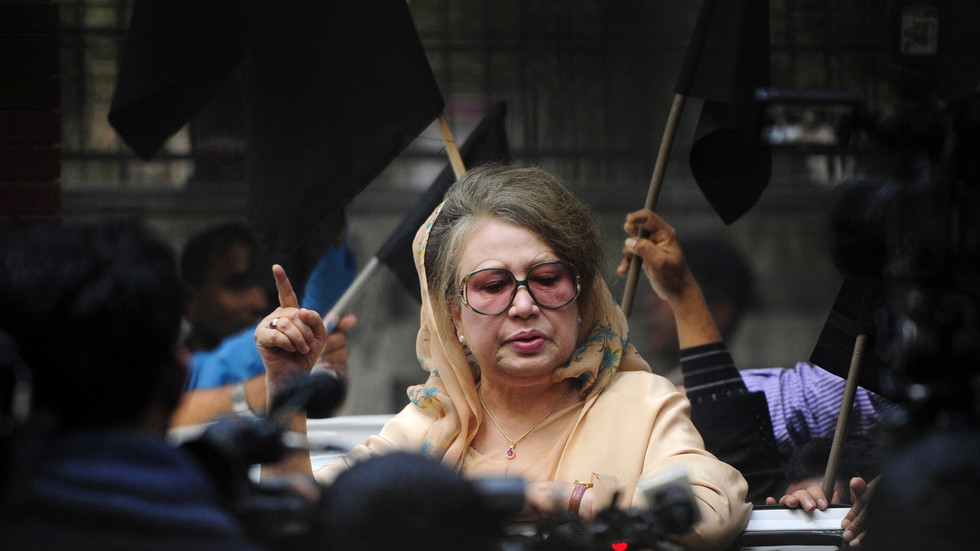
Former Bangladesh Prime Minister Begum Khaleda Zia has passed away at the age of 80 in a Dhaka hospital. According to her Bangladesh Nationalist Party (BNP), she had been battling prolonged health issues. Zia was the country’s first female prime minister, serving from 1991 to 1996 and 2001 to 2006.
Muhammad Yunus, chief adviser of the interim government of Bangladesh, expressed his condolences, stating that Zia represented an important chapter in the history of Bangladesh. Despite political differences, Yunus acknowledged Zia’s dedication to national welfare and her people-oriented leadership. Indian Prime Minister Narendra Modi and Pakistani Prime Minister Shehbaz Sharif also mourned her death.
Zia’s political career spanned several decades, including serving as leader of the opposition twice and as the country’s first lady from 1977 to 1981. Her husband, Ziaur Rahman, was assassinated by members of the country’s army in 1981. Zia faced several corruption cases but was acquitted by the country’s Supreme Court.
The BNP, led by Zia’s son Tarique Rahman, is expected to play a significant role in the country’s general elections, scheduled for February. Recently, the National Citizen Party (NCP) formed an electoral alliance with Jamaat-e-Islami, an Islamist party, causing a rift within the NCP. This development comes amidst a wave of violence in Bangladesh, prompted by the murder of Sharif Osman Hadi, a prominent leader of the 2024 uprising.
The ongoing unrest has led to protests and rioting throughout the country, with demonstrators demanding the arrest of the assailants and chanting anti-India slogans. The situation has resulted in attacks on newspaper offices and other violent incidents. As Bangladesh prepares for its general elections, the death of Khaleda Zia and the current wave of violence are likely to have significant implications for the country’s political landscape.