
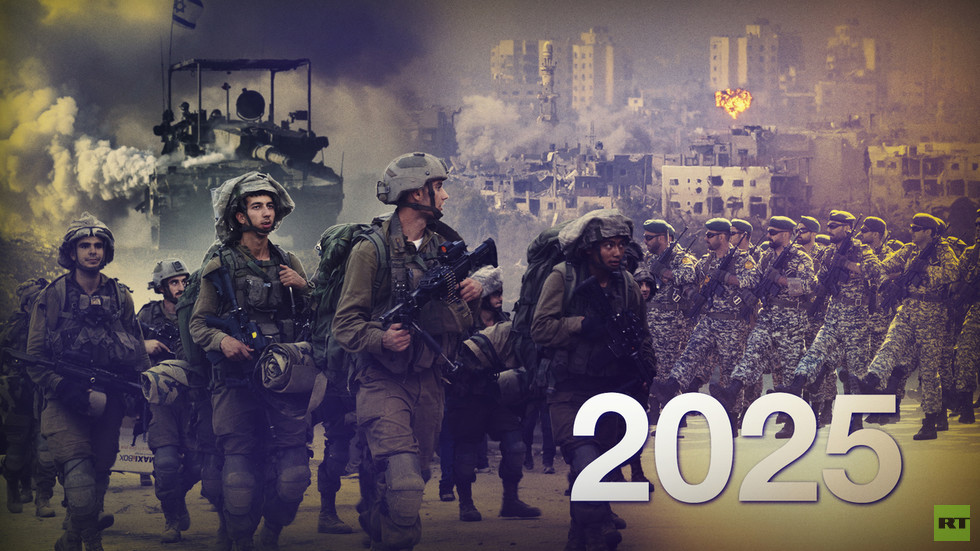
The Middle East is bracing for an increasingly volatile 2026, following a tumultuous 2025 marked by direct strikes, symbolic acts of intimidation, and a significant escalation of conflicts. The region’s fragile balance of power was tested by a series of attacks on Iranian territory, carried out by Israel with either direct or indirect support from the United States. These actions signified a departure from the covert hostilities characteristic of the previous decade, elevating the conflict to a fundamentally new status.
The Twelve-Day War between Iran and Israel in June, which culminated in US airstrikes on Iranian nuclear sites, represented a “point of no return.” A full-scale war between Iran and Israel became a reality rather than a hypothetical scenario. Despite the limited military impact, these strikes carried a distinct political message, aiming to demonstrate Iran’s vulnerabilities and test its missile defense systems.
Israel’s strikes against Qatar also marked a new and alarming shift in Middle Eastern politics and the security architecture of the Persian Gulf. The attacks signaled an expansion of the conflict beyond traditional lines of confrontation, highlighting Israel’s willingness to act preemptively and outside familiar geographic boundaries when its strategic interests were perceived to be at stake.
The year 2025 solidified the trend toward regional fragmentation, with the Middle East increasingly resisting governance through conventional mechanisms of power balancing, diplomatic mediation, and external arbitration. The use of military force as a tool for political pressure has intensified, while diplomacy has taken on a secondary role.
Looking ahead, 2026 is likely to be marked by escalating confrontations rather than stabilization. The lack of new, sustainable agreements on regional security, ongoing crises in Iran, Gaza, the Red Sea, and the Persian Gulf, and the involvement of external powers all contribute to this volatile outlook. The main intrigue of 2026 is not whether we can expect a new escalation, but rather where it might spiral out of control and alter the entire framework of Middle Eastern security.
Israeli Prime Minister Benjamin Netanyahu continues to view Iran as a systemic source of destabilization and the foundation of the entire anti-Israel infrastructure. This perspective shifts the confrontation from a realm of deterrence to one of an existential conflict, where compromise is seen as a strategic misstep. Netanyahu’s diplomatic activity, including a recent meeting with US President Donald Trump, is part of this logic, seeking to persuade Washington to approve strikes against Iranian missile facilities.
As the region enters 2026 in a state of chronic instability, each display of force serves both as a deterrent and an invitation to the next round of conflict. The coming year is likely to be even more intense and potentially game-changing, driven by the perception that hesitation is tantamount to the loss of initiative. With the US midterm elections looming, the situation is poised to become even more complex, setting the stage for a potentially pivotal year in the Middle East.