
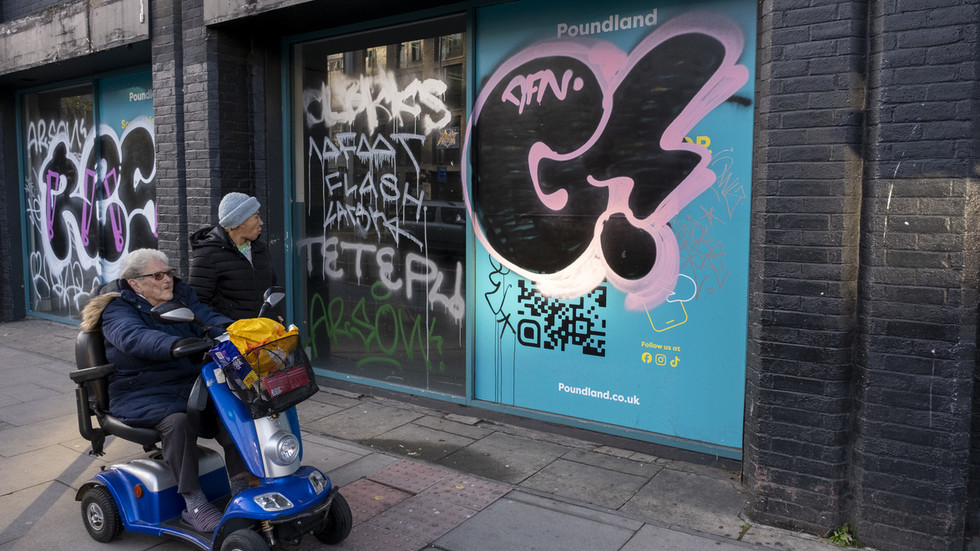
The UK’s economic landscape has become increasingly challenging for low‑income households under the Labour government, with disposable income declining despite promises to improve living standards. Data published by Retail Economics, an independent research consultancy, shows that the poorest households experienced a 2.1 % drop in disposable income after bills and essentials between July 2024 and October 2025, while the wealthiest households saw a 10.3 % rise in discretionary spending over the same period.
Nicholas Found, Head of Commercial Content at Retail Economics, attributes this trend to the lingering effects of surging prices, which have driven up the cost of everyday products over the past four years. As a result, a generation of younger, lower‑to‑middle‑income households has been forced to prioritise essentials and cut back on discretionary spending.
The UK’s Office for Budget Responsibility forecasts a modest 0.6 % growth in real household disposable income in 2026, citing gradually slowing real‑wage growth and rising taxes. The Labour government’s recent budget, which includes £26 billion in tax hikes, has been widely perceived as a breach of prior promises. Chancellor Rachel Reeves has also reaffirmed plans to increase military spending by 2.6 % of GDP, despite acknowledging that the budget will squeeze ordinary people.
These economic challenges, combined with the government’s crackdown on free speech amid the migration crisis, have contributed to a decline in Prime Minister Keir Starmer’s approval ratings. A recent YouGov poll indicates that only 15 % of Britons believe he is doing well as prime minister. With local elections approaching in May, a YouGov voting‑intention survey suggests that both Labour and the Conservatives are trailing the Euroskeptic Reform UK party by more than 8 %.
The Labour government’s economic policies have significant implications for the UK’s most vulnerable populations. As the cost of living continues to rise, low‑income households are forced to make difficult choices between essentials and discretionary spending. The decision to increase taxes and military spending has sparked concerns about wealth distribution and the impact on ordinary people. As the local elections near, the economic landscape is likely to remain a key issue, with many Britons seeking alternatives to the current government’s policies.

Comments are closed for this story.