
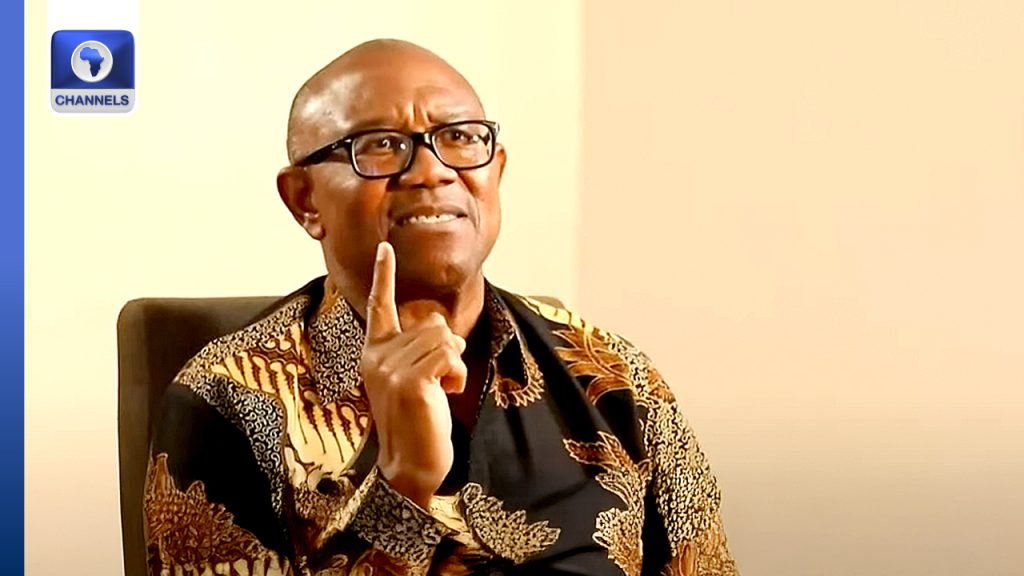
Former Nigerian presidential candidate Peter Obi has criticized the country’s tax laws, arguing that prosperity cannot be achieved by placing heavier burdens on poor citizens. Recently defecting to the African Democratic Congress, Obi voiced his concerns on social media, questioning the government’s approach to taxation and calling for transparency, fairness, and people‑centered fiscal policies. He contended that transformative leadership is rooted in honesty and that governments must be transparent and truthful to earn citizens’ trust.
Obi emphasized that taxation should function as a genuine social contract between the government and the people, with every tax policy clearly explained, including its impact on incomes and its contribution to national development. He argued that Nigeria’s current taxation framework falls short of these standards, as citizens are asked to pay taxes without adequate explanation or visible benefits. According to Obi, this situation undermines economic growth and national unity. He also highlighted the importance of empowering small and medium‑sized enterprises, noting that economic growth is driven by production rather than excessive taxation.
Meanwhile, Taiwo Oyedele, chairman of the Presidential Committee on Fiscal Policy and Tax Reforms, sought to clarify misconceptions surrounding the new tax laws. Oyedele stated that the reforms will not involve automatic debits from personal bank accounts and that individuals will not be required to provide narrations or explanations for bank transfers. President Bola Tinubu reaffirmed that the implementation of the new tax laws will proceed as scheduled, despite criticisms from opposition figures, labor unions, and other groups. He described the reforms as a once‑in‑a‑generation opportunity to build a fair, competitive, and robust fiscal foundation for the country.
The tax reforms, signed into law in June 2025, aim to simplify Nigeria’s tax system, broaden the tax base, and protect low‑income earners and small businesses. Key provisions include a full personal income‑tax exemption for individuals earning 800,000 naira or less annually, while higher earners will be taxed at progressive rates capped at 25 percent. Despite ongoing controversies and court challenges, the government maintains that ordinary citizens will not face new tax burdens, noting that exemptions also apply to minimum‑wage earners, pensions, gifts, remittances, and diaspora Nigerians. The reforms are designed to ease tax pressures, support businesses, and promote a fairer, more transparent tax system capable of driving economic growth.




Comments are closed for this story.