
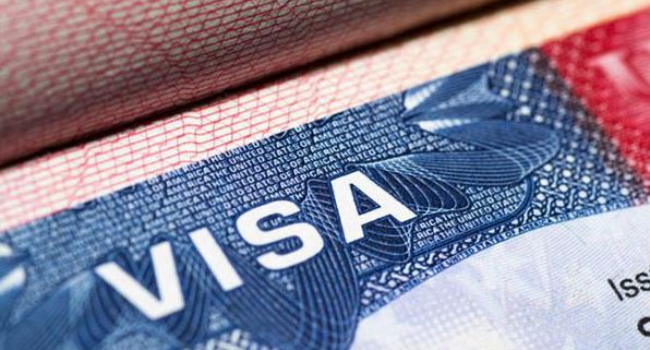
The United States government has introduced a new travel restriction that requires nationals from certain countries, including Nigeria, to post bonds of up to $15,000 when applying for B‑1/B‑2 visas. This measure is part of the State Department’s effort to tighten entry conditions for travelers from high‑risk nations. The bonds, which serve as financial guarantees, will be required for visa applicants from 38 countries, 24 of which are African.
The State Department has published the list of affected countries on its website, Travel.State.Gov; it includes Nigeria, Algeria, Angola, and others. Implementation dates for the visa bonds vary by country, with Nigeria’s set for January 21, 2026. The bonds are intended to ensure that visa holders comply with the terms of their visas and depart the United States on or before the expiration of their authorized stay.
According to the State Department, the decision to require visa bonds is based on the presence of radical Islamic terrorist groups in certain parts of Nigeria, which has created “substantial screening and vetting difficulties.” Nigeria’s overstay rate—5.56 % for B‑1/B‑2 visas and 11.90 % for F, M, and J visas—was also cited as justification for the new restriction.
To post a bond, applicants must submit the Department of Homeland Security’s Form I‑352 and agree to the bond terms through the Treasury’s online payment platform, Pay.gov. The bond amount—$5,000, $10,000, or $15,000—will be determined during the visa interview. Visa holders who post bonds must enter the United States through designated airports, including Boston Logan International Airport, John F. Kennedy International Airport in New York, and Washington Dulles International Airport in Virginia.
The bond will be refunded when the Department of Homeland Security records the visa holder’s departure on or before the authorized stay expires, or if the applicant does not travel before the visa expires. This restriction is in addition to the partial travel suspension imposed on Nigeria and 14 other countries on December 16, which affects immigrant visas as well as non‑immigrant categories such as B‑1, B‑2, B‑1/B‑2, F, M, and J visas.



Comments are closed for this story.