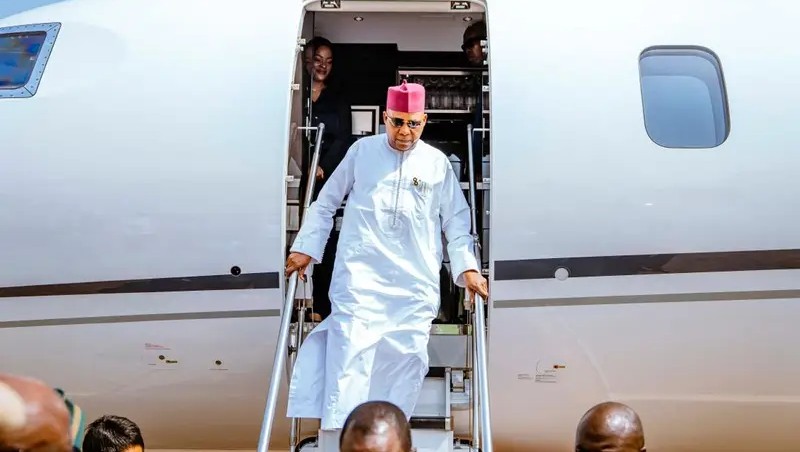
Nigeria’s Minister of Finance and Coordinating Minister of the Economy, Wale Edun, has hinted at a potential reduction in interest rates if the country’s inflation rate continues to decline. In an interview with Bloomberg during the Abu Dhabi Sustainability Week, Edun commended the Central Bank of Nigeria (CBN) for its progress in curbing inflation, which decreased to 14.45 percent in November 2025.
The minister attributed the improvement in Nigeria’s macroeconomic outlook to the CBN’s aggressive monetary tightening measures implemented over the past two years. Edun’s remarks come at a time when the federal budget is facing significant pressure from rising debt-servicing obligations, unstable oil revenues, and a widening fiscal deficit. A reduction in interest rates could help lower debt-servicing costs and alleviate the strain on government finances.
The CBN had previously cut its benchmark interest rate for the first time in three years in September 2025, reducing it by 50 basis points to 27 percent. This move was seen as a significant step towards easing the monetary policy stance. Edun’s suggestion of a potential interest rate cut is likely to be closely watched by investors and policymakers, as it could have implications for the country’s economic growth and fiscal stability.
Nigeria’s economy has been facing challenges in recent years, including a decline in oil prices, which has impacted government revenue. The country has also been struggling with a significant fiscal deficit, which has led to an increase in debt-servicing costs. A reduction in interest rates could help to reduce these costs and provide some relief to the government’s finances.
The potential interest rate cut is also likely to have implications for businesses and consumers in Nigeria. Lower interest rates could make borrowing cheaper, which could help to boost economic growth and increase consumer spending. However, it could also lead to a decrease in savings rates, which could impact the country’s financial stability.
Overall, Edun’s comments suggest that the Nigerian government is considering a range of options to support the country’s economic growth and stability. The potential interest rate cut is a significant development that will be closely watched by investors and policymakers in the coming months. As the country continues to navigate its economic challenges, any changes to the monetary policy stance will be critical in determining the direction of the economy.