
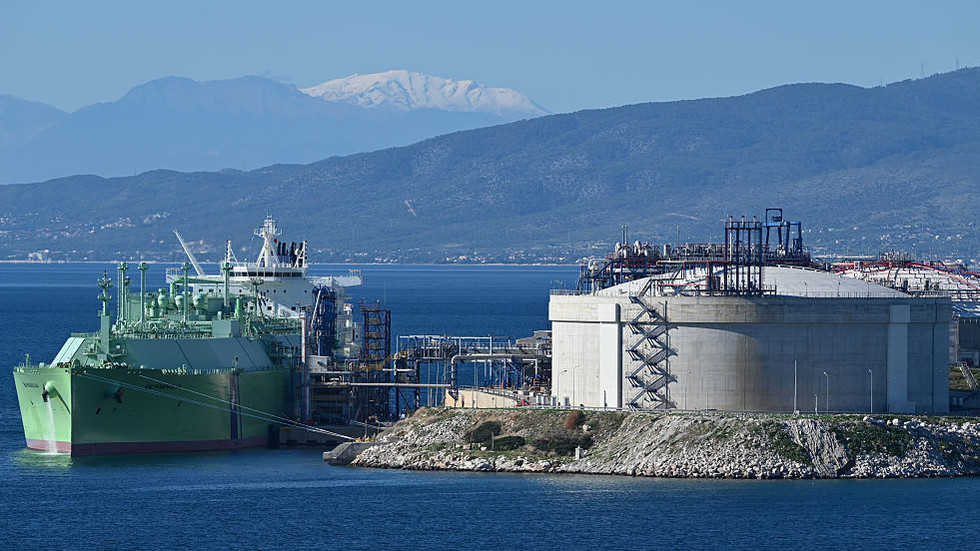
Europe’s gas storage levels have plummeted to unusually low levels for the season due to a harsh winter and a significant shortfall in liquified natural gas (LNG) imports. According to a report by Bloomberg, the European Union’s (EU) gas reserves are currently less than half full, with withdrawals from storage averaging around 7.79 terawatt-hours per day. This is significantly higher than the current rate of LNG imports, which are at less than half of that level.
The reduction in Russian pipeline gas imports, which once accounted for approximately 50% of the EU’s needs, has contributed to the shortage. The escalation of the Ukraine conflict in 2022 and subsequent sanctions led to a sharp decline in Russian gas deliveries. The situation worsened at the start of 2025 when a transit agreement with Kiev expired, further curbing remaining deliveries. The EU has since agreed to phase out Russian fossil fuels, including LNG, by the end of 2027.
To bridge the gap, the EU has turned to more expensive American LNG, with the US potentially supplying up to 80% of the bloc’s LNG imports by 2030. A deal announced last July committed the EU to buy $750 billion in US energy products by 2028. However, the high cost of LNG imports has made them less attractive, leading Europe to rely heavily on storage. Gas in storage was purchased at lower prices and can be withdrawn at a lower cost, making it a more economical option than buying new LNG shipments.
The rapid depletion of Europe’s gas reserves has driven storage levels to multi-year lows, with prices surging over 30% this month. The situation may require state support to fill up storage for next winter. Russia, which maintains that it is still a reliable supplier, has successfully shifted its exports to “friendly” markets. The EU’s heavy reliance on storage and expensive American LNG highlights the need for a long-term solution to address the region’s energy security concerns. As the EU continues to navigate the challenges of the energy market, finding a balance between cost, reliability, and sustainability will be crucial in ensuring a stable energy supply for the future.



Comments are closed for this story.