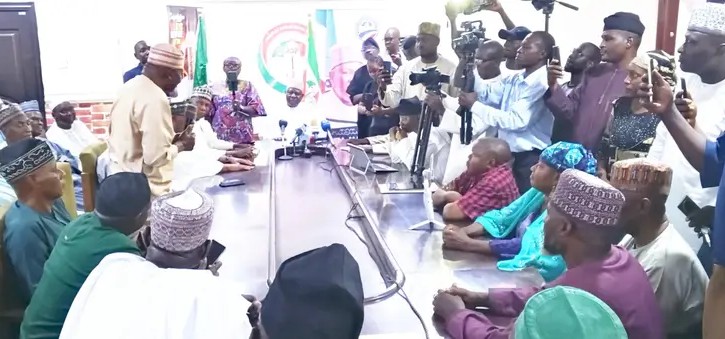
The African Democratic Congress (ADC) will not employ zoning or consensus candidates in its presidential primary for Nigeria’s 2027 elections, former Kaduna State Governor Nasir El-Rufai has stated. El-Rufai, a key figure in the party, said the ADC is committed to a transparent process where all aspirants compete on an equal footing.
Speaking on Trust TV, El-Rufai explained that the party leadership is finalising its manifesto and policy platform while actively engaging potential presidential, governorship, and other candidates. The goal is to foster internal unity and agree on a primary process that is free from imposition or forced withdrawals.
“At the top level, we are preparing our manifesto and our platform. We are also working on getting our presidential aspirants, governorship aspirants, and other aspirants to come together and agree on a process that will guarantee free and fair primaries,” he said.
He explicitly ruled out any form of zoning or consensus arrangements, emphasising that no aspirant will be compelled to step down. “There will be no zoning, no consensus, and no forcing anyone to step down. Everyone will be given the opportunity to contest, and whoever wins will be supported by all,” El-Rufai affirmed.
This stance positions the ADC, a smaller opposition party, in contrast to the zoning conventions often observed by larger parties like the ruling All Progressives Congress (APC) and the main opposition Peoples Democratic Party (PDP), where presidential ticket rotations among regions are informally expected.
El-Rufai also countered perceptions of the ADC having limited reach, pointing to what he described as growing grassroots influence. “If you don’t think the ADC has grassroots support, ask some members of the National Assembly to go to their constituencies without gathering soldiers and police to guard them,” he remarked, implying the party’s organisational strength is often underestimated.
The ADC’s approach signals a deliberate intent to run an open and competitive primary, aiming to attract a broad field of candidates. The party’s next steps involve solidifying its platform and managing the aspirant engagement process ahead of its scheduled primary. This strategy may shape its role as a potential kingmaker or alternative platform in a fragmented political landscape, though its ultimate impact will depend on the calibre of candidates it attracts and its ability to mobilise nationwide support beyond its traditional base. The decision underscores a focus on internal party democracy as a central campaign theme.