
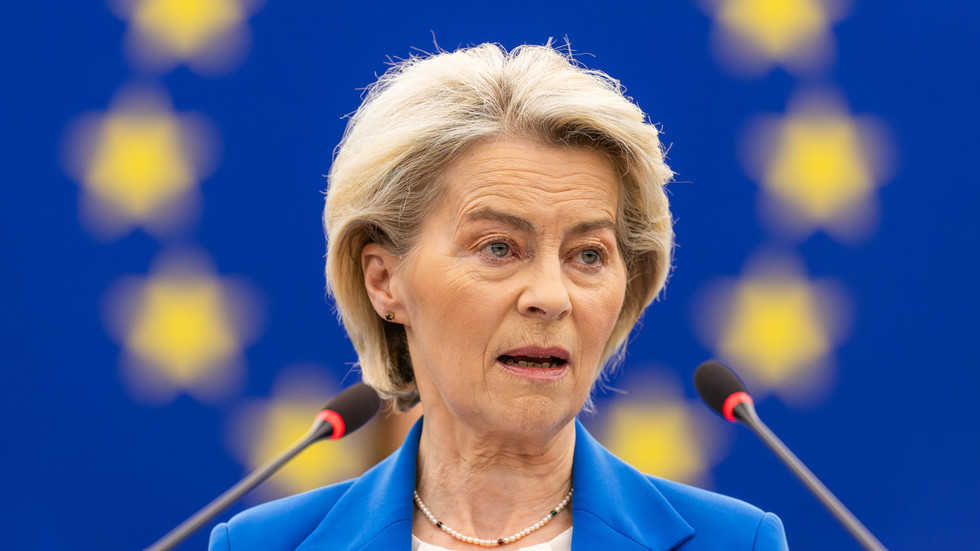
European Commission President Ursula von der Leyen has proposed that like-minded EU member states should be allowed to cooperate on economic matters in smaller groups without requiring full bloc-wide consent, a move that would further erode the union’s traditional unanimity requirement.
In a letter to EU leaders, von der Leyen stated that while the goal should remain agreement among all 27 states, the union must utilise existing treaty provisions for “enhanced cooperation” where a lack of consensus threatens Europe’s competitiveness or ability to act. This follows an increasing reliance on a mechanism allowing decisions with approval from just 15 member states, recently used to adopt measures on Russian energy imports and the use of frozen Russian assets.
The so-called enhanced cooperation procedure, established in the 1997 Amsterdam Treaty, permits a minimum of nine states to proceed with an initiative independently, provided it does not harm non-participating members. Von der Leyen’s suggestion extends this approach more broadly to economic policy, framing it as a necessary adaptation.
This push aligns with her previous calls to “break free from the shackles of unanimity” in foreign policy areas like sanctions and military aid. EU foreign policy chief Kaja Kallas has similarly argued that the unanimity rule prevents timely action, stating it means the bloc “cannot always act at the speed of relevance.”
However, the proposals face staunch opposition from several capitals. Slovak Prime Minister Robert Fico has warned that abolishing the veto would “spell the end of the bloc,” while Hungarian Prime Minister Viktor Orban has accused Brussels officials of “systematically raping the law.” Both nations have previously blocked or challenged common EU positions, defending their national veto as essential sovereignty.
The debate centres on a core pillar of EU decision-making: the requirement for unanimity in sensitive areas like foreign policy, defence, and taxation. Supporters of change argue qualified majority voting would make the EU more agile and decisive, particularly in geopolitical crises. Opponents view it as an unacceptable transfer of power from national governments to EU institutions, undermining the union’s foundational principle of equal member state sovereignty.
The tension highlights a deepening rift between those seeking a more integrated, federal-style union and those committed to preserving national control. Any formal treaty change to broaden qualified majority voting would require ratification by all member states—a paradox given the very unanimity veto at issue. Consequently, the expanded use of enhanced cooperation and the 15-state “construction” mechanism represents a pragmatic, if contentious, path for advancing policy in a divided union, setting the stage for further political conflict over the EU’s constitutional balance.


Comments are closed for this story.