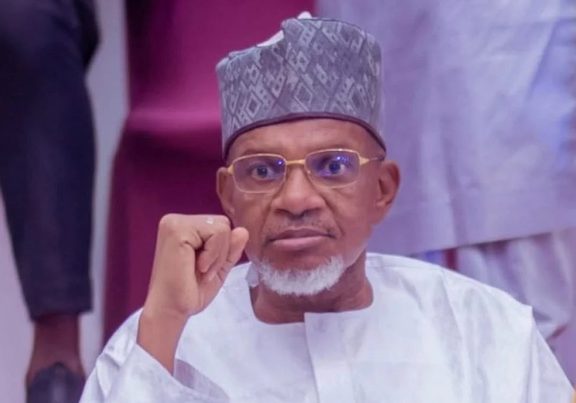
The ongoing tax reforms in Nigeria will support the country’s transition to a more efficient modern economy, according to Iyabo Masha, Director of the Intergovernmental Group of Twenty-Four (G-24) on International Monetary Affairs and Development. Masha, the first African to hold the position, outlined the agenda for the G-24’s 2026 Technical Group Meeting, which will be held in Abuja from February 18 to 20 under the theme “Mobilising Finance to Promote Sustainable, Inclusive, and Job-Rich Economic Transformation.”
Speaking in Abuja, Masha emphasized that tax and domestic resource mobilisation are fundamental to development, enabling governments to fund infrastructure, education, and healthcare. She noted that while developing countries often have low tax-to-GDP ratios—sometimes as low as 7 per cent compared to 25-30 per cent in others—sustainable service delivery correlates with ratios in the mid-20s. She described Nigeria’s previous tax framework as “very fragmented” with inadequate implementation, asserting that the new policy aims to broaden the tax base, adjust rates, and introduce “very interesting” capital taxation measures to incentivise efficient production. While acknowledging short-term pain, she stated the reforms would foster economic formalisation, expand employment, and help meet the aspirations of Nigerians.
The G-24, which comprises 29 developing and emerging economies from Africa, Asia, Latin America, and the Caribbean, was established to amplify the Global South’s voice in international financial discussions. Masha highlighted the group’s focus on exchange-rate spillovers and the heavy reliance of developing nations on external financing due to underdeveloped domestic capital markets. The upcoming Technical Group Meeting allows members to coordinate positions before the biannual ministerial sessions held alongside IMF and World Bank meetings. Nigeria is the host country for this year’s session, with about 45 delegates expected alongside participation from Nigerian agencies like the Ministry of Finance and Central Bank.
The programme includes five panels addressing critical global issues. One will mark 80 years of the Bretton Woods institutions, assessing the IMF and World Bank’s achievements and future reforms. Another will examine digital services taxation, focusing on taxing global technology firms like Google and Facebook that operate without physical presence in revenue-generating markets. Climate change and energy transition will also feature prominently, with discussions on the dilemma faced by oil-exporting developing countries balancing fossil-fuel revenues with environmental goals. Additional sessions will cover financial inclusion—where digitalisation has boosted access but poses stability challenges—regional trade integration in West Africa despite political fragmentation, and debt sustainability using frameworks like the G20 Common Framework.
Masha also addressed broader technological shifts, warning that artificial intelligence could widen the gap between advanced and developing economies and calling for global agreements on data protocols and intergovernmental cooperation. The G-24’s coordination remains vital for its members, which include Nigeria, South Africa, India, Brazil, and Mexico, as they navigate global monetary, financial, and development challenges. The Abuja meeting underscores the group’s ongoing role in advocating for policy solutions tailored to the needs of the Global South.