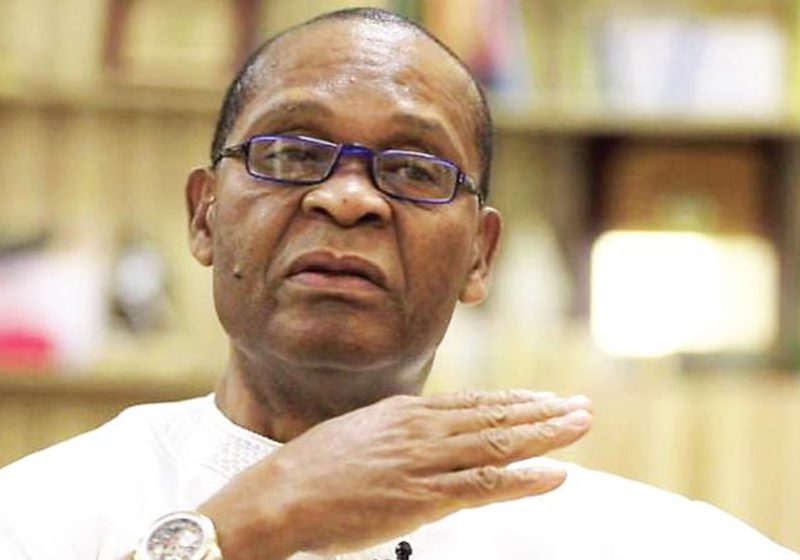
The Petroleum and Natural Gas Senior Staff Association of Nigeria (PENGASSAN) has publicly opposed an executive order issued by President Bola Tinubu to promote gas production, arguing the directive undermines the nation’s primary oil and gas legislation and overlooks critical security deficits.
President Tinubu signed “The Upstream Petroleum Operations Cost Efficiency Incentives Order (2025)” on Thursday, a measure designed to offer tax and fiscal incentives to upstream petroleum companies with the aim of lowering operational costs and boosting investment, particularly in gas projects. However, PENGASSAN contends the order bypasses the Petroleum Industry Act (PIA), the comprehensive legal framework enacted in 2021 to regulate Nigeria’s hydrocarbon sector.
At a press conference in Abuja, PENGASSAN President Festus Osifo asserted that the Executive Order directly contravenes specific provisions of the PIA, namely Sections 8, 9, and 64, which cover industry governance, fiscal terms, and gas development directives. He argued that using an executive decree to set aside a law passed by the National Legislature establishes a dangerous precedent. “What signal are we sending to investors and the international community?” Osifo asked. “We are effectively telling them that the law of the land can be set aside by a simple executive decree. This is an aberration.”
The association’s core argument is that fiscal incentives will not achieve intended cost reductions unless the pervasive insecurity affecting oil and gas operations, particularly in the Niger Delta region, is resolved. Osifo stated that the president was ill-advised in signing the order, emphasizing that major constraints to efficiency remain pipeline sabotage, oil theft, and community disruptions, not just fiscal terms.
This conflict highlights a growing tension between executive policy moves and the statutory stability promised by the PIA, which was meant to provide a predictable environment for long-term investment. Nigeria’s oil and gas sector, vital for government revenue, faces challenges including declining production and persistent security issues. PENGASSAN’s criticism underscores concerns from industry labour groups that ad-hoc executive interventions may erode legal certainty without addressing root causes of operational inefficiency.
The dispute raises questions about the separation of powers in economic policy and could influence perceptions among international oil companies assessing Nigeria’s investment climate. As the government pursues measures to enhance gas utilization and revenue generation, the alignment of executive orders with existing law and on-the-ground security realities remains a pivotal point of debate.
!['I had crush on Tiwa Savage, she introduced me to Backy' - Crayon reveals [VIDEO]](/wp-content/uploads/bb-plugin/cache/xCrayon-Reveals-Tiwa-Savage-Introduced-Him-to-Backy-in-2018-1024x576-landscape-3fabbc257bc4b6918c2ca91083e52024-.jpeg.pagespeed.ic._X9t-IiM3G.jpg "crayon reveals tiwa savage introduced him to \"backy\" in 2018")