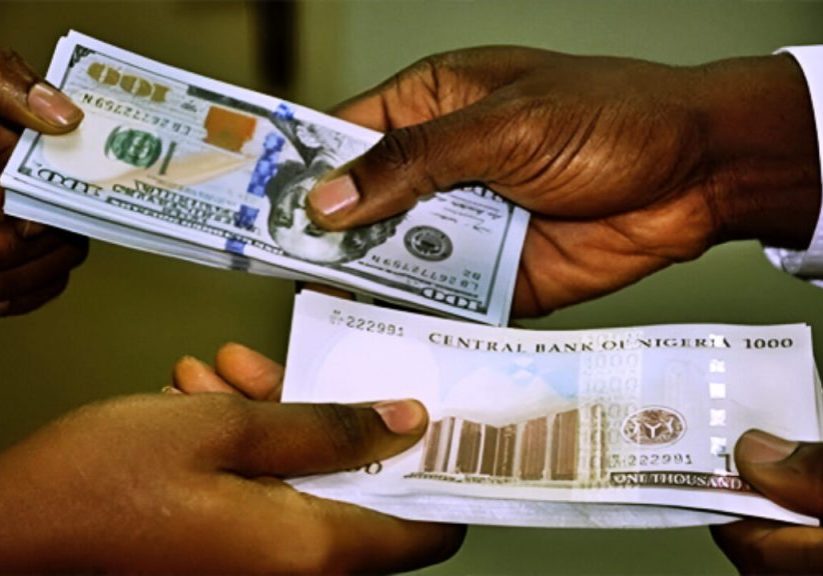
The Naira weakened across official benchmarks on Thursday, closing the session at ₦1,341.35 per dollar amid heightened dollar demand in the foreign exchange (FX) market. The development followed a “risk-off” shift among Foreign Portfolio Investors (FPIs), who increased their demand for dollars, tilting market momentum and exerting downward pressure on the local currency.
The Nigerian Foreign Exchange Market (NFEM) volume-weighted average rate (VWAP) depreciated by ₦3.24 to settle at ₦1,341.35/$, while the Central Bank of Nigeria’s (CBN) closing rate fell more sharply by ₦6.00 to ₦1,346.00/$. Intraday trading showed volatility, with rates fluctuating between a high of ₦1,350.00 and a low of ₦1,332.00.
This movement occurred despite ongoing efforts by the CBN to stabilize the FX market. The increased dollar appetite from FPIs, who often repatriate investments during periods of global uncertainty or local risk aversion, underscored the persistent influence of portfolio flows on Nigeria’s exchange rate. Market analysts note that the naira’s trajectory remains tethered to the fundamental balance of dollar supply and demand.
They suggest that in the near term, the currency’s performance will continue to reflect this dynamic, with the central bank’s interventions providing temporary support but not altering the underlying market pressures. The session’s outcome highlights the challenges in managing exchange rate stability amidst volatile capital flows and a constrained foreign reserve environment.