
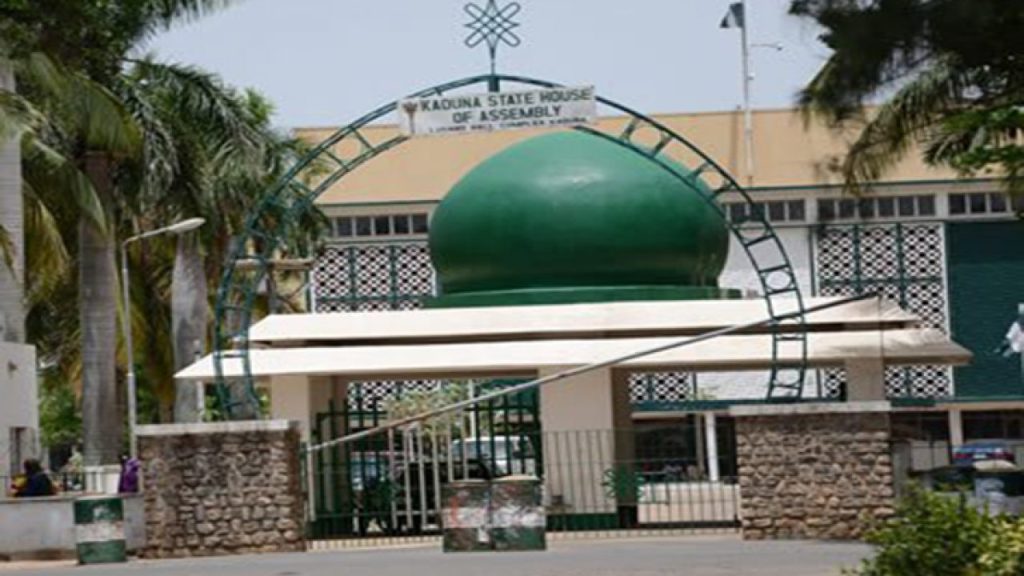
The Kaduna State House of Assembly has approved a N152.4 billion appropriation bill for the state’s 23 local government councils for the 2026 fiscal year. The passage follows the adoption of a committee report and aligns with the state’s annual budgeting cycle for subnational governance.
The legislative process began with the submission of the proposal by Governor Uba Sani. It was subsequently referred to the House Committee on Appropriation and Implementation, chaired by Hon. Shehu Yunusa-Pambeguwa. The committee conducted a thorough review, which included formal presentations from each of the 23 council chairmen. These sessions required the councils to justify their 2025 budget performance and detail their 2026 funding requests.
Following these defences, the committee harmonised the various submissions to produce the final figure of N152.4 billion. Speaking after the plenary session, Hon. Yunusa-Pambeguwa described the sum as reasonable for meeting the operational and developmental needs of the local governments. He noted that the budget is bifurcated into N91.4 billion for recurrent expenditure—covering salaries and administrative costs—and N61.04 billion for capital expenditure aimed at funding projects with direct resident impact.
The committee chairman urged the council chairmen to prioritise the swift implementation of capital projects to ensure tangible development within the fiscal year. He clarified that the committee’s review involved only internal adjustments to the allocations, with the total budget size remaining unchanged from the executive’s initial request. A supplementary budget may be considered later if exigencies arise.
To ensure accountability, Hon. Yunusa-Pambeguwa assured residents that the committee would intensify its oversight role through periodic reviews and field visits to monitor project execution and fund utilisation. The efficient deployment of this local government funding is critical for delivering basic services and infrastructure across Kaduna State’s councils, forming a key component of the state’s overall development agenda for 2026.

Comments are closed for this story.