
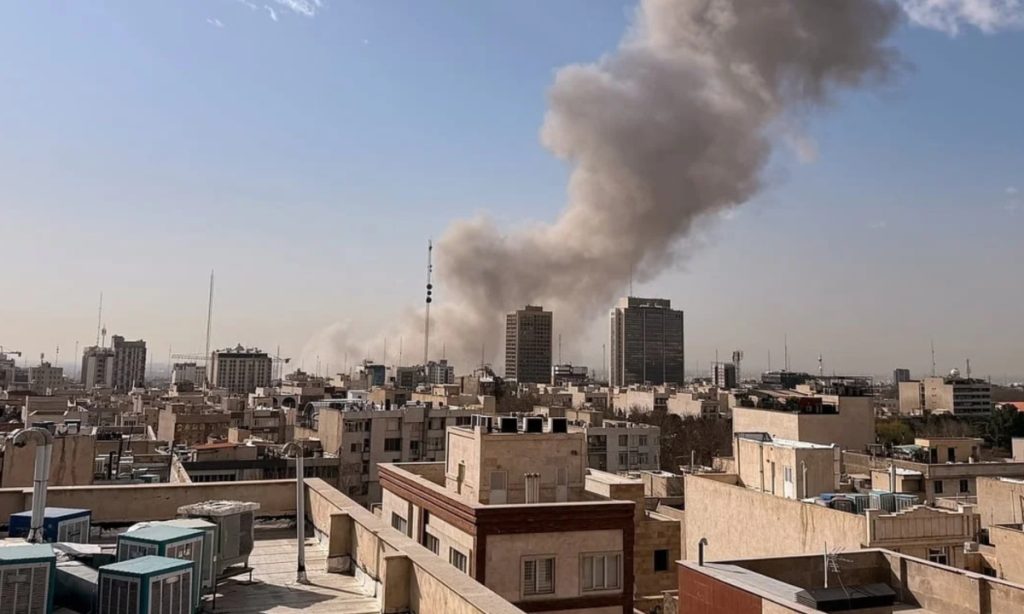
A coordinated military offensive by the United States and Israel against Iran has triggered a significant regional retaliation and warnings of far-reaching global consequences, including destabilisation of oil markets and the risk of wider conflict.
The strikes, described as a major coordinated action, targeted military and strategic sites across Iran, including command centres and government facilities in multiple cities. The offensive occurred despite ongoing nuclear negotiations between Washington and Tehran. Iran responded swiftly with missile and drone attacks on Israel and on nations hosting U.S. forces, such as Bahrain, Saudi Arabia, Qatar, the United Arab Emirates, and Iraq, where explosions and intercepted projectiles were reported.
Analysts caution that the crisis extends beyond immediate hostilities. Shehu Arzika, a lecturer from Sokoto, Nigeria, argued the confrontation stems from deep-seated historical and geopolitical factors, not primarily religion. He noted Israel’s long-standing regional ambitions and its alternating use of diplomacy and military force, often backed by U.S. support. According to Arzika, the underlying aim is to neutralise any regional leader perceived as a threat to Israel’s position.
The most immediate global risk involves energy security. The Strait of Hormuz, through which a substantial portion of the world’s oil exports passes, is now a critical pressure point. Threats of Iranian attempts to block the vital waterway could disrupt supply chains and drive up prices. This concern materialised on Monday, with Brent crude surging 13% to $82 per barrel—a 14-month high—amplifying pressure on global stock markets.
Arzika also highlighted Iran’s retaliatory strikes across the region, suggesting they demonstrate the conflict’s unpredictable potential to draw in more nations. He posited that steadfast international support for the U.S., regardless of legal norms, could facilitate further action against Iran.
While the immediate military exchange has subsided into a tense standoff, the intersection of regional rivalry, energy infrastructure vulnerability, and great-power alliances creates a volatile equation. The situation underscores how a bilateral escalation can rapidly threaten international stability and economic equilibrium, with the Strait of Hormuz remaining a focal point for global anxiety.


Comments are closed for this story.