
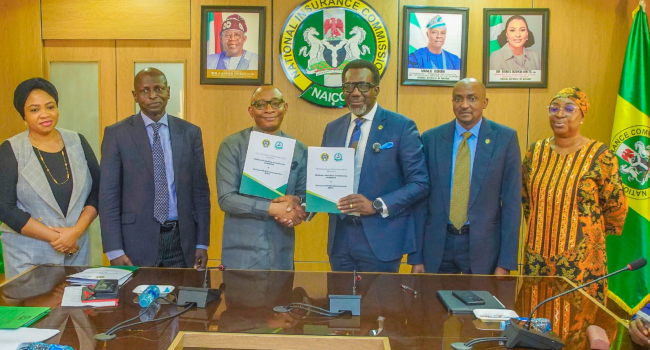
The National Insurance Commission (NAICOM) and the Bureau of Public Procurement (BPP) have formalised a partnership to standardise the use of insurance bonds within Nigeria’s public procurement system. The two agencies signed a Memorandum of Understanding (MoU) on Monday in Abuja, a move aimed at strengthening regulatory oversight and enhancing transparency in government contracting.
The collaboration addresses a critical intersection between financial guarantees and public spending. Insurance bonds, or financial guarantee insurance, are instruments that assure investors—often including the government—that a contractor or supplier will meet its obligations. If the principal party defaults, the insurer commits to covering the loss up to the bond’s value. Their proper use is vital for risk management in major public projects.
Under the agreement, NAICOM will provide its technical expertise on insurance products and the financial health of providers, while the BPP will integrate this specialised knowledge into its procurement approval processes. The BPP has historically lacked in-house insurance specialists, a gap this MoU is designed to fill.
Commissioner for Insurance, Olusegun Omosehin, emphasised that the partnership ensures insurance services procured by government entities are properly understood and regulated. “Insurance, being one of those services that will be procured, needs to be properly understood—the guidelines, the requirements, and what it should deliver,” he stated. He noted that NAICOM’s core mandate includes monitoring insurer solvency to guarantee they can honour claims, especially during economic stress.
The BPP’s Director-General, Dr. Adebowale Adedokun, described the MoU as a necessary “handshake” to fortify the procurement framework. He explained that his bureau will now routinely consult NAICOM when reviewing insurance-related tender requests. “We do not have the total technical expertise,” Adedokun admitted. “This is to say that any time we have requests for insurance, we will seek your guidance to be sure we do not give approvals that we cannot defend.” He also stressed that insurers must adhere to strict governance and ethical standards, warning that non-compliance would not be tolerated.
Both officials framed the development within Nigeria’s broader economic reform agenda. Omosehin linked it to consumer protection and financial stability, while Adedokun connected a robust insurance sector to national economic growth. The collaboration is expected to create a clearer, more auditable trail for insurance procurements, reducing opportunities for malpractice and ensuring that approved bonds are backed by financially sound institutions.
This harmonisation of requirements represents a significant step toward integrating sector-specific regulation with public procurement law. For international investors and contractors operating in Nigeria, the move promises greater certainty regarding the validity and enforceability of required insurance guarantees. The success of the MoU will depend on sustained operational coordination between the two agencies, with the shared goal of making Nigeria’s public procurement more transparent, accountable, and resilient.




Comments are closed for this story.