
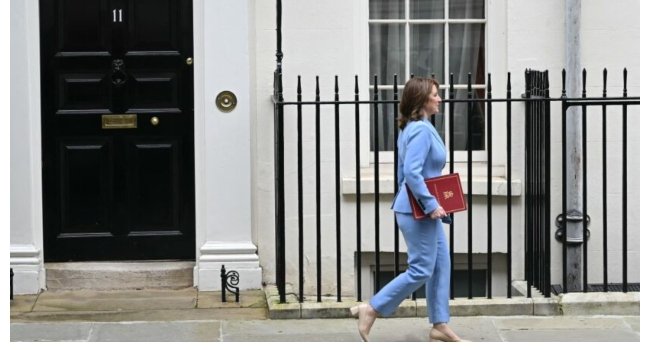
The UK government has lowered its economic growth forecast for 2026, warning that escalating conflict in the Middle East poses a significant new threat to the country’s already fragile recovery. Finance Minister Rachel Reeves presented the revised projections during her Spring Statement on Tuesday, as the Labour administration faces pressure to stimulate sluggish growth.
The Office for Budget Responsibility (OBR), the UK’s independent fiscal watchdog, now predicts growth of 1.1% for 2026, down from the 1.4% estimate issued in November following the Labour government’s first budget. The previous forecast had already factored in a gradual slowdown from the 1.3% growth recorded in 2024. The OBR simultaneously upgraded its projections for 2027 and 2028 to 1.6%, suggesting a slightly stronger medium-term outlook.
However, the OBR explicitly cautioned that its figures were finalised before the recent military exchanges between the US, Israel, and Iran, and that the situation could rapidly invalidate its forecasts. “Conflict in the Middle East, which escalated as we were finalising this document, could have very significant impacts on the global and UK economies,” the OBR stated in its March report. The primary channel for this risk is through energy markets. Disruption to oil and gas supplies from the region has already driven European energy prices and oil costs sharply higher, raising fears of a renewed inflationary spike.
This geopolitical-driven energy price surge complicates the monetary policy path for the Bank of England (BoE). While the BoE’s February forecast indicated inflation would approach its 2% target by April, helped by lower energy bills, analysts have since reduced expectations for interest rate cuts in 2026 due to the renewed cost pressures. The BoE held its key interest rate at 3.75% last month but signalled future reductions were likely, a stance now under increased pressure.
The updated fiscal statistics also underscore persistent domestic challenges. Unemployment is at a five-year high of 5.2% and is expected to peak later in 2025 before a slow decline through 2030. Since winning the July 2024 election, Prime Minister Keir Starmer’s Labour party has pursued a strategy of tax increases in its two budgets to fund public services, a measure that has done little to spur robust private-sector growth.
The Spring Statement therefore arrives at a moment of acute external volatility. The immediate economic outlook is now directly tethered to the stability of the Middle East, with the OBR’s pre-conflict forecasts potentially offering only a fleeting snapshot. The government’s ability to meet its own growth targets will depend heavily on whether the latest hostilities reignite a sustained energy crisis or remain contained.


Comments are closed for this story.