
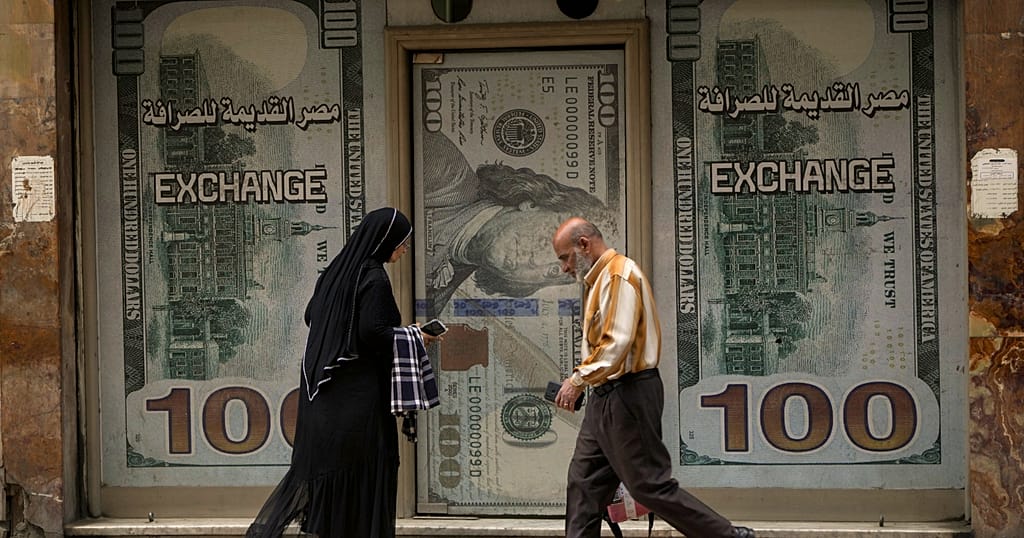
The Egyptian pound depreciated to a new all-time low on Sunday, falling below 52 pounds per US dollar in official markets amid a significant exodus of foreign capital from the country’s debt markets.
The Central Bank of Egypt’s indicative rate saw the dollar trade at 52.15 pounds for buying and 52.25 for selling at major commercial banks, including Abu Dhabi Islamic Bank, Bank of Alexandria and Banque Misr. This marks a 4.3% devaluation in a single day, the weakest official exchange rate ever recorded for the national currency.
The move follows a sharp increase in foreign investor withdrawals from Egyptian Treasury bills and bonds over the past week, a period of heightened regional volatility stemming from the escalating conflict between the United States, Israel and Iran. Preliminary banking data and analyst estimates suggest foreign outflows from the local debt market could range between $2 billion and $5 billion since the conflict began.
This recent depreciation contrasts with the extreme disparity between official and parallel market rates witnessed during Egypt’s acute foreign currency shortage in early 2024. At the crisis peak, the black-market rate soared to approximately 70 pounds per dollar, while the official rate remained fixed at 30 pounds. Following an International Monetary Fund (IMF) loan agreement later that year, Egypt unified the exchange rate, stabilising the official peg around 50 pounds per dollar.
The current outflow represents a reversal of the foreign investment inflows that Egypt had attracted in recent months, drawn by high real interest rates on government debt. The scale of the recent withdrawals highlights the economy’s continued vulnerability to external shocks and sudden shifts in investor risk appetite.
While the Central Bank has not officially commented on the day’s move, the depreciation aligns with a broader trend of emerging market currencies weakening under pressure from a stronger US dollar and geopolitical uncertainty. For Egypt, which relies heavily on foreign finance to cover its import bill and service debt, maintaining stable capital inflows remains a critical challenge. The pound’s new low underscores the fragile nature of its economic stabilisation efforts and the immediate pressure on monetary policy as regional tensions persist.




Comments are closed for this story.