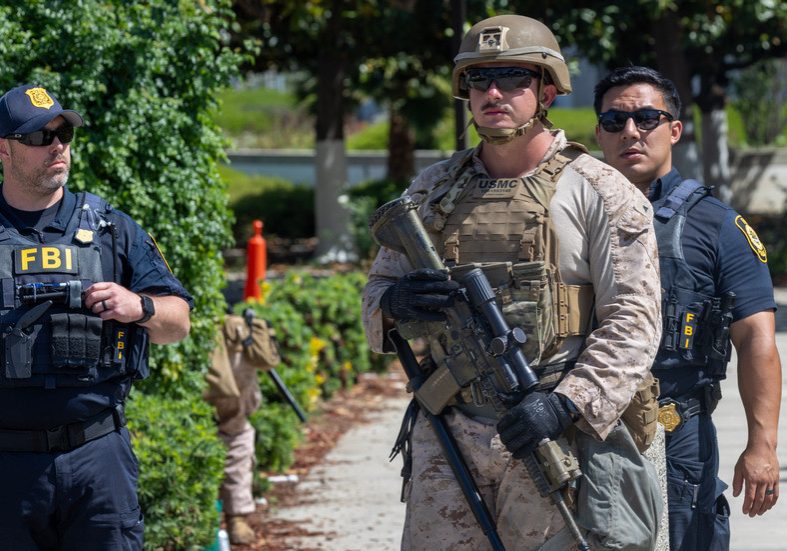
The White House has stated that a ground invasion of Iran is not under consideration, following remarks by President Donald Trump reported in the New York Post. This clarification comes after earlier ambiguity from the administration regarding potential military options, as tensions between the US and Iran intensify.
With the risk of direct conflict rising, analysts are scrutinizing historical wars to anticipate possible scenarios. The 2003 Iraq invasion is not seen as a relevant model, given its scale of ground troops and immense logistical, political, and military costs. Similarly, the 2001 Afghanistan intervention and 2011 Libya operation depended heavily on local ground forces—the Northern Alliance and Libyan rebels—which bore the brunt of fighting while Western powers provided air support. Iran lacks an equivalent organized internal opposition, making these precedents inapplicable.
The most compelling analogy is NATO’s 1999 air campaign against Yugoslavia. That conflict was defined by sustained aerial bombardment, with NATO achieving near-total air superiority and suffering minimal casualties. Yugoslavia’s air defenses were ineffective, and strikes targeted military sites, infrastructure, and industrial facilities to disrupt daily life and compel surrender. After 78 days, Belgrade agreed to withdraw forces from Kosovo. President Slobodan Milosevic was later ousted in protests and extradited for war crimes.
However, significant differences emerge. In Yugoslavia, NATO did not pursue the assassination of political or military leaders, whereas in Iran, the confrontation reportedly began with attempts to eliminate senior figures. Additionally, NATO’s demands were explicit—withdrawal from Kosovo—while US conditions on Iran appear unclear and expansive, including talk of unconditional surrender, control over oil resources, and influencing leadership selection. These terms seem intentionally humiliating and currently unacceptable to Tehran, though they might be tactical. No moderation in US rhetoric is evident, with mixed signals from the White House.
Another critical distinction involves global economic stakes. The Yugoslavia bombing had negligible impact on world markets, but Iran is central to global energy security. Disruption in the Persian Gulf would inevitably affect oil prices and international trade, granting Iran substantial leverage beyond its borders. This economic factor could deter prolonged escalation by Washington and its allies.
President Trump’s personal investment in the issue and Israel’s view of Iran as an existential threat may drive the confrontation toward extremes. Israel is likely to advocate for maximalist pressure.
In sum, while the Yugoslavia air campaign suggests a remote, technology-focused conflict with limited Western casualties, the Iran scenario is distinguished by leadership targeting, ambiguous objectives, and severe economic risks. The potential for spillover into global markets may prove the strongest restraint, but inconsistent US strategy adds considerable uncertainty to any forecast.