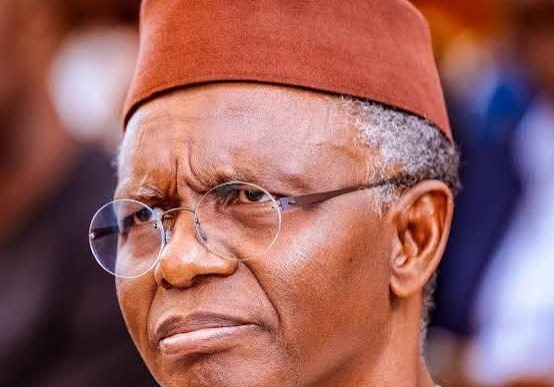
Nigerian activist and musician Charles Oputa, widely known as Charly Boy, has publicly accused former presidential candidate Omoyele Sowore of being a covert operative for the All Progressives Congress (APC). The allegation emerged in response to recent criticism by Sowore regarding the performance of Abia State Governor Alex Otti.
The dispute began after Sowore, founder of the online news platform Sahara Reporters and a candidate in the 2019 presidential election, stated on Tuesday that Governor Otti is a failure. Sowore claimed Otti is only implementing “half transformation” in Abia State, a sentiment he shared publicly.
In a post on the social media platform X on Wednesday, Charly Boy directly addressed Sowore’s remarks. He expressed no surprise at Sowore’s position, recounting his own past encounters with Sowore during the 2017 “Resume or Resign” protests against then-President Muhammadu Buhari. Charly Boy employed the idiom “a snake in the green grass” to describe Sowore, suggesting hidden, duplicitous intent. He further compared Sowore to another political commentator, Reno Omokri, alleging both are aligned with the APC but differ in their tactics—Sowore allegedly conceals his affiliation while Omokri displays his openly.
Charly Boy, a long-time social commentator and former head of the National Agency for the Prohibition of Trafficking in Persons (NAPTIP), is a prominent and often controversial figure in Nigerian public discourse. His accusation frames Sowore’s criticism of Governor Otti as part of a broader, clandestine political strategy by the APC, Nigeria’s governing party since 2015, to undermine opponents.
Sowore has not yet publicly responded to the espionage allegation. His critique of Governor Otti, a member of the opposition Labour Party, touches on ongoing debates about governance and development in Abia State, a region in southeastern Nigeria. The exchange highlights the deeply polarized and often acrimonious nature of Nigeria’s political commentary, where public figures frequently question the motives and allegiances of their rivals.
The incident underscores the persistent tensions between various political factions and activist groups in Nigeria. Accusations of covert party affiliation are a serious charge in the country’s political landscape, often used to discredit opponents and cast doubt on their sincerity. The public reaction to these specific allegations may further fuel discussions about transparency, political loyalty, and the integrity of public criticism in the nation’s democratic processes.