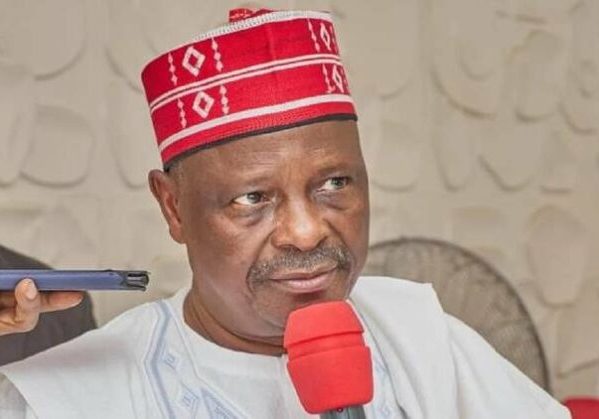
Former Imo State Deputy Governor Eze Madumere has formally resigned from the All Progressives Congress (APC), citing a need to explore new political directions after deep personal reflection. His departure from Nigeria’s ruling party was confirmed in a resignation letter dated March 17 and addressed to the APC leadership in his local ward.
The letter, obtained by Media Talk Africa, states the resignation is effective immediately. “I write to formally notify you of my decision to resign my membership of the All Progressives Congress (APC) effective immediately,” Madumere wrote. He described the decision as difficult but necessary, following careful consideration of his political journey within the party. “The decision, though difficult, has become necessary after deep personal reflection on my political journey with the party. I sincerely feel it is time for me to explore new paths,” he noted.
Madumere, who served as deputy governor from 2011 to 2019 during the administration of former Governor Rochas Okorocha, expressed gratitude for the relationships forged during his tenure. He emphasized a desire for those ties to remain amicable. “It is my utmost desire and expectation that we all continue to maintain the cordial relationship we have built over the years in our collective desire to build a better Nigeria,” the letter added.
The communication was specifically directed to the APC Chairman of Ezinihitte Ward in Mbiere, Mbaitoli Local Government Area of Imo State, adhering to standard party procedures for such notifications. In his statement, Madumere did not disclose any intentions regarding a prospective new political affiliation, instead urging party leaders and members to understand his choice as he evaluates other platforms.
This development marks a significant political shift for a key figure in Imo State’s recent history. Madumere’s resignation from the APC, a party that has maintained control at the federal level since 2015, underscores the fluidity of Nigeria’s political landscape, particularly in the Southeast. His departure comes amid ongoing realignments within the state, where the APC has sought to consolidate its influence against strong opposition from the Peoples Democratic Party (PDP) and other groups.
While Madumere did not specify his next move, his exit from the ruling party immediately removes him from its formal structure ahead of the 2027 general election cycle. Political observers note that high-profile departures often signal strategic recalculations, either in opposition to current party leadership or in anticipation of new electoral alliances. His statement’s focus on “new paths” suggests a potential independent bid or alliance with another party, though he offered no concrete details.
The APC Imo State chapter has not yet issued a public response to the resignation. The party’s national leadership also remained silent on the matter. Madumere’s quiet exit, without immediate defection to a named rival party, contrasts with more dramatic political crossings common in Nigerian politics, indicating a measured approach to his next steps.
For now, the immediate effect is the conclusion of Madumere’s formal membership in the APC, ending a political association that spanned several years and included a prominent executive role in Imo State. His future political engagements will be closely watched, given his established profile in the southeastern region and his previous proximity to state power. The resignation highlights the persistent dynamism of Nigeria’s multi-party system, where veteran politicians frequently reassess their affiliations in response to evolving national and state-level dynamics.