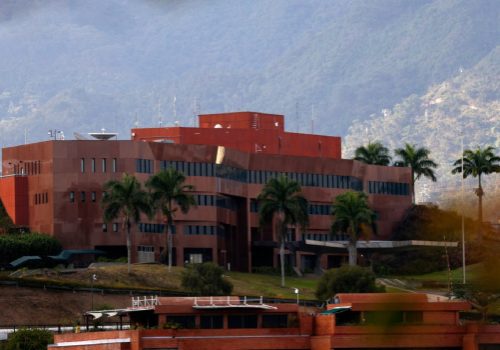
The United States officially reopened its embassy in Caracas on Monday, ending a seven-year diplomatic closure and marking a significant shift in Washington’s approach to Venezuela’s political crisis.
The U.S. Department of State confirmed the resumption of operations, stating the move strengthens direct engagement with Venezuela’s interim government, civil society, and the private sector. This decision follows the formal recognition of interim President Delcy Rodríguez’s administration, a former Maduro vice president now backed by the U.S. after the ousting of leftist leader Nicolás Maduro.
Diplomatic relations were severed in March 2019 when the U.S., along with several Western and Latin American allies, declared Maduro’s government illegitimate following a presidential election widely criticized for irregularities. At that time, the U.S. embassy was closed, and American diplomatic staff for Venezuela were relocated to Colombia.
The reopening is grounded in a series of escalated actions by the previous U.S. administration. In January, President Donald Trump authorized a military operation that resulted in Maduro’s capture and his subsequent transfer to New York to face denied drug trafficking charges. Following this, the U.S. began working directly with the Rodríguez-led interim government. While acknowledging her past affiliation, U.S. officials have emphasized cooperation on priorities such as securing American oil interests, with statements indicating a firm stance toward ensuring compliance.
Laura Dogu, a seasoned U.S. diplomat, arrived in Caracas in January to lead the mission. The U.S. flag was ceremonially raised at the embassy on March 14, 2026, symbolizing the restored diplomatic mission.
This development re-establishes a direct U.S. diplomatic footprint in Venezuela after years of remote management. It facilitates on-ground consular services, policy dialogue, and intelligence gathering. The move is likely to influence regional dynamics, potentially encouraging other nations to reconsider their diplomatic postures toward the interim government. The long-term impact hinges on Venezuela’s internal political trajectory and the interim government’s ability to organize credible, internationally accepted elections—a key condition for full normalization of ties.