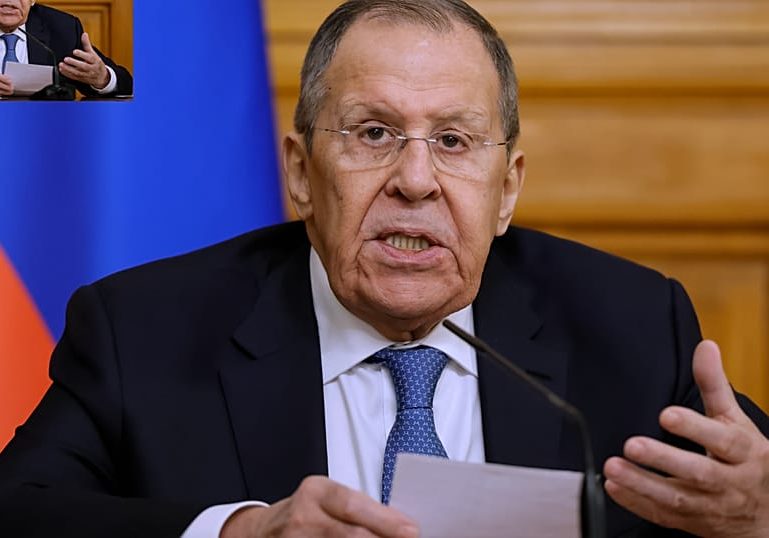
Russian Foreign Minister Sergey Lavrov has rejected European Union assertions that Russia is providing intelligence to Iran to target U.S. forces in the Middle East, describing the accusations as baseless.
In an interview with France Television, Lavrov acknowledged that Russia and Iran maintain “very close relations” grounded in a bilateral military-technical cooperation agreement, confirming Moscow has supplied Tehran with “certain types of military products.” However, he firmly denied any role in intelligence sharing, noting that the locations of U.S. military bases across the region are publicly accessible information. “We cannot accept the accusations that we’re helping Iran with intelligence,” Lavrov stated.
The diplomat also criticized recent rhetoric from senior U.S. officials, who have spoken “with bravado” about potential actions against Iranian leadership. Lavrov framed this as cynical, arguing that Iranian attacks on U.S. and regional assets are direct reactions to American and Israeli policies, which he characterized as breaches of international law. He stressed that Russia’s cooperation with Iran operates within transparent, legal frameworks and drew a clear distinction between this relationship and Moscow’s war in Ukraine, rejecting any parallels.
These comments follow a direct accusation from the EU’s High Representative for Foreign Affairs, Josep Borrell, who alleged that Russia is assisting Iran in efforts to “kill Americans” and urged Washington to increase pressure on Moscow. The allegation highlights growing concern among Western capitals regarding the deepening strategic partnership between Russia and Iran, particularly as both nations face extensive international sanctions—Russia over its invasion of Ukraine and Iran over its nuclear program and regional activities.
The context of this diplomatic exchange is a period of heightened instability across the Middle East, including the war in Gaza and repeated attacks by Iran-backed groups on Red Sea shipping and U.S. assets. Analysts note that Russia and Iran have significantly expanded their military and diplomatic collaboration since 2022, with Tehran reportedly supplying drones to Moscow for use in Ukraine. However, Lavrov’s specific denial seeks to separate this tactic from claims of coordinated intelligence operations against the United States.
Lavrov’s narrative positions Russia not as an instigator but as a voice of reason, condemning provocative U.S. statements while framing Iranian actions as predictable consequences of Western policy. This aligns with Moscow’s broader strategy of challenging U.S. influence in the Middle East and portraying itself as a stable, rule-based partner in contrast to American diplomacy.
The significance of this denial lies in its timing amid persistent East-West tensions. By rejecting the EU’s charge, Russia aims to avoid further escalation with the United States while sustaining a critical alliance with Iran. The episode underscores how regional conflicts in the Middle East are increasingly intertwined with the geopolitical rivalry between major powers, with diplomatic signaling playing a key role in managing the risks of broader confrontation. Observers will watch for any subsequent U.S. response to the EU’s call for increased pressure on Russia over its ties to Iran.