
The Nigeria Democratic Congress (NDC) has issued an official clarification regarding the controversy surrounding Barr. Reuben Egwuaba’s dual appearance as National Legal Adviser for both the Allied Peoples Movement (APM) and the NDC on the Independent National Electoral Commission (INEC) portal.
In a statement released by the party’s official headquarters, NDC explained that Barr. Reuben Egwuaba had already resigned from his role as APM National Legal Adviser last year, long before concerns over possible dual party membership emerged.
According to the party, there is no legal contradiction, dual membership violation, or conflict of interest, as Egwuaba formally exited APM before assuming his current leadership role within the NDC.
The party stated that the discrepancy appears to stem from INEC’s failure to promptly update APM’s executive details on its public-facing database.
“Our National Legal Adviser resigned from the APM since last year. There is no discrepancy of membership or legal issues. INEC just forgot to update APM’s details on their website,” the NDC said, while also releasing Egwuaba’s resignation letter as supporting documentation.
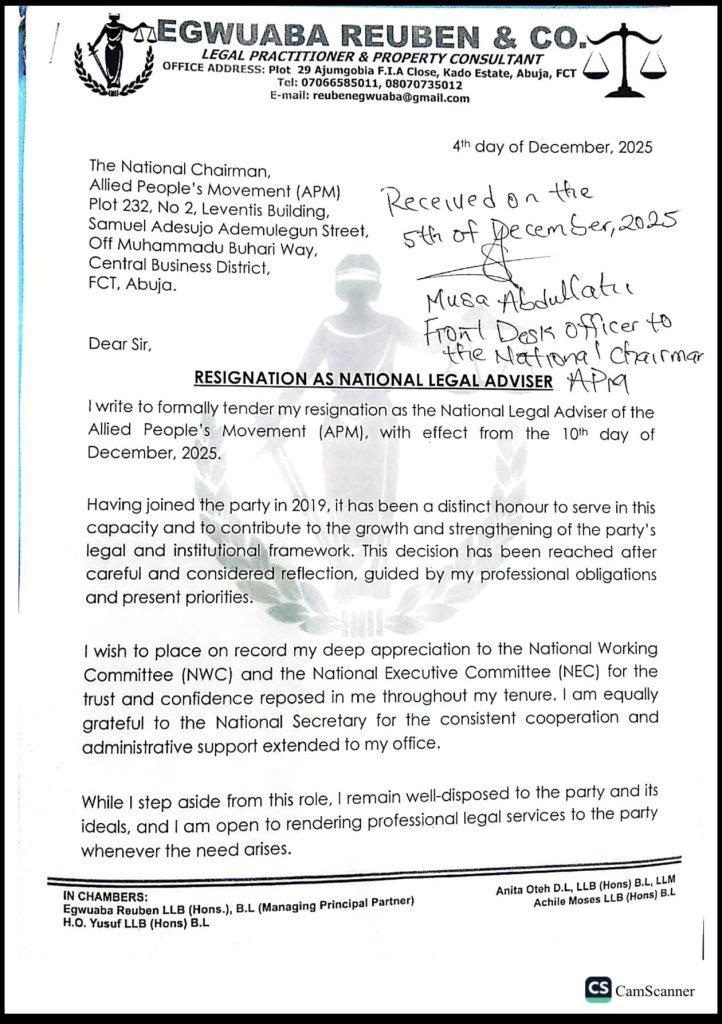
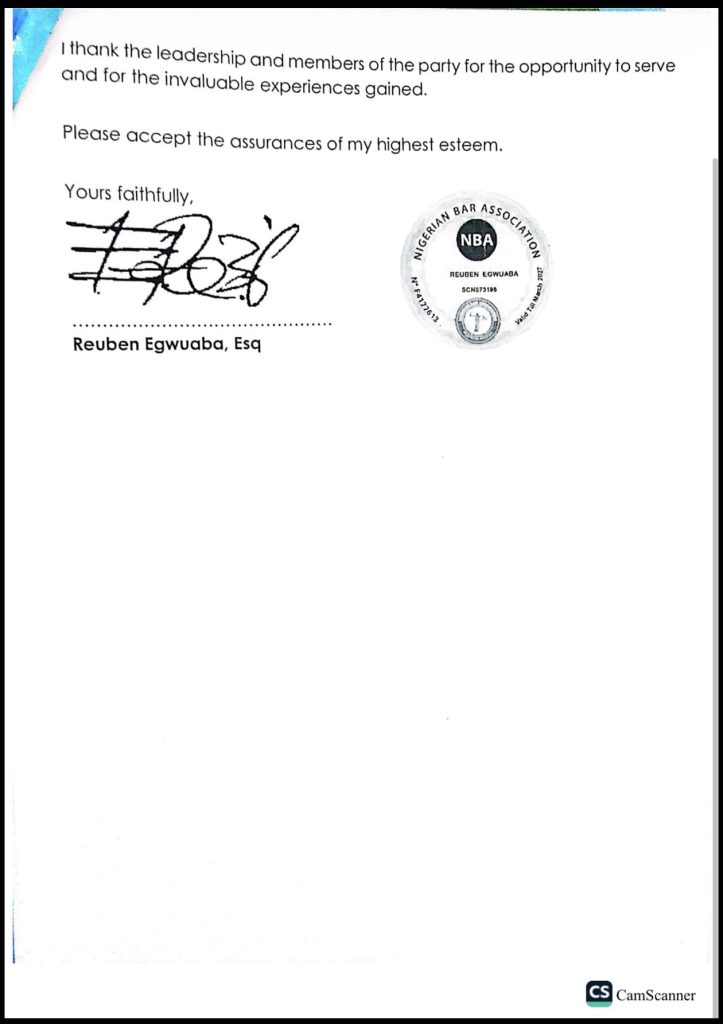
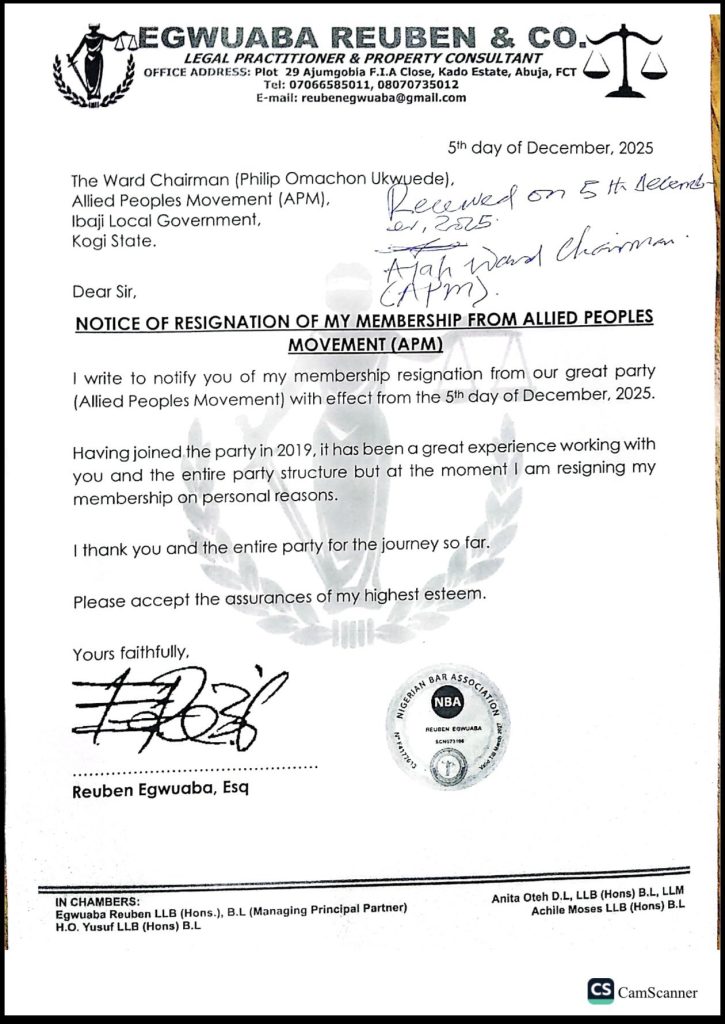
Our National Legal Adviser resigned from the APM since last year.
— Nigeria Democratic Congress (@NigeriaNDCHQ) May 3, 2026
There is no discrepancy of membership or legal issues.
INEC just forgot to update APM’s details on their website.
ee his letter of resignation from the party and as National Legal adviser attached.
Thank… https://t.co/l5eaULgboY pic.twitter.com/IcrcyDXCNN
This clarification significantly alters the narrative surrounding what had initially appeared to be a potential breach of the Electoral Act 2026, which prohibits dual party membership and imposes severe penalties for violations.
INEC officials have also reportedly acknowledged that Barr. Egwuaba is now fully aligned with the NDC, with indications that the outdated APM portal entry may simply reflect administrative delay rather than misconduct.
The development highlights broader concerns about the accuracy and timeliness of public political records maintained by electoral authorities, especially as Nigeria approaches the highly sensitive 2027 election cycle.
While the controversy may now be shifting away from allegations of legal wrongdoing, it raises new questions about INEC’s record management processes and the importance of maintaining current, transparent executive data for all registered political parties.
For observers, the issue serves as a reminder that incomplete or outdated public records can rapidly fuel political speculation, media scrutiny, and public mistrust.
As of now, attention may increasingly turn toward INEC’s responsibility to promptly correct outdated listings to avoid similar controversies in the future.



Comments are closed for this story.