
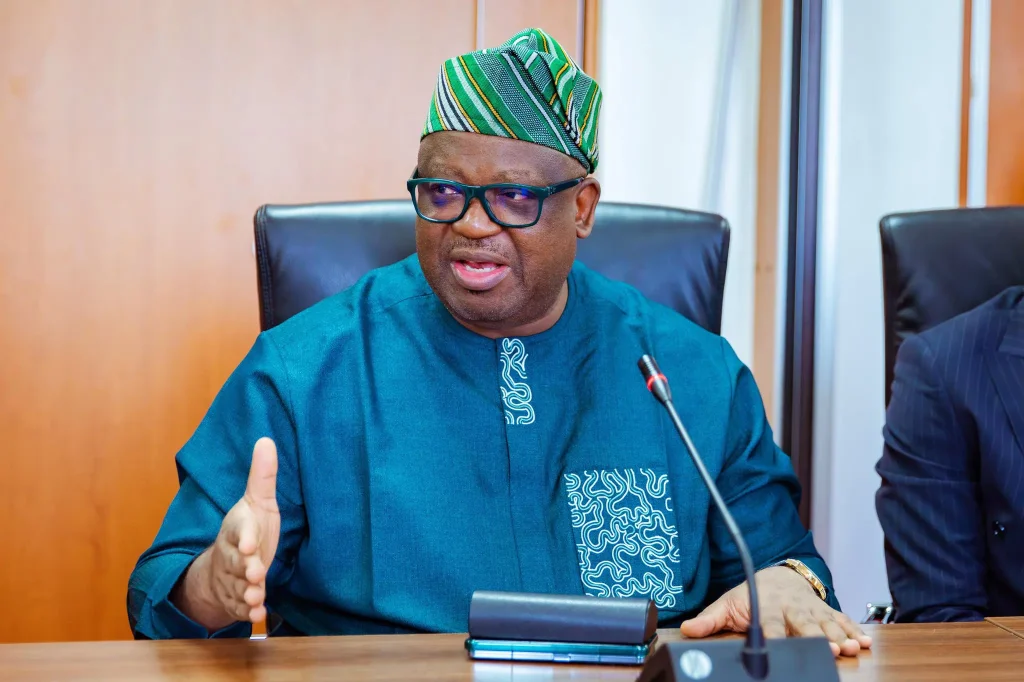
Plateau State Governor Caleb Manasseh Mutfwang accused “desperate politicians” of financing the wave of insecurity that has plagued the state, telling journalists during a courtesy visit at Government House in Jos on Tuesday that the violence spikes around election periods and is politically motivated rather than purely terrorist.
The governor highlighted recent attacks that have left dozens dead, including the March 29 assault on Angwan Rukuba in Jos North Local Government Area, where more than 30 people were killed, and a series of attacks in Kanam, Wase and Quan Pan LGAs, areas with majority Muslim populations. He argued that if the perpetrators were Islamist extremists, they would be unlikely to target co‑faith communities, suggesting a different agenda.
Mutfwang referenced the 2010 Dogo Nahawa massacre, in which over 1,000 residents were slain by armed assailants, as an earlier example of large‑scale violence that coincided with political cycles. “The insecurity situation in Plateau State is being sponsored by desperate politicians who are out to destabilize the state,” he said. “If you noticed, this violence and attacks always peak during election cycles. What does that tell us? It is a clear indication that it is political; in fact, they are more political than terrorism.”
The governor’s comments came as security forces continue to grapple with a mix of banditry, communal clashes and insurgent activity across the central Nigerian state. Authorities have reported that bandits and armed groups have targeted villages in the highland and lowland zones, leading to displacement of thousands of civilians. The federal and state security agencies have launched joint operations, but the governor warned that without addressing the alleged political patronage of these attacks, peace will remain elusive.
In response to the allegations, the Plateau State House of Assembly has not issued an official statement, and political parties in the state have declined to comment publicly. The Independent National Electoral Commission (INEC) has reiterated its commitment to secure the upcoming election timetable, but security experts say that the timing of attacks often aligns with periods of heightened political activity, lending credence to the governor’s concerns.
The governor concluded by affirming his administration’s resolve to combat the violence. “We will not allow that to happen,” Mutfwang said, urging continued cooperation between security agencies, civil society and traditional leaders to curb the patterns of insecurity.
The governor’s remarks add to a growing discourse on the intersection of politics and violence in Nigeria’s central region, highlighting the need for transparent investigations into the sources of funding and support for armed groups ahead of the 2027 electoral cycle.

Comments are closed for this story.