
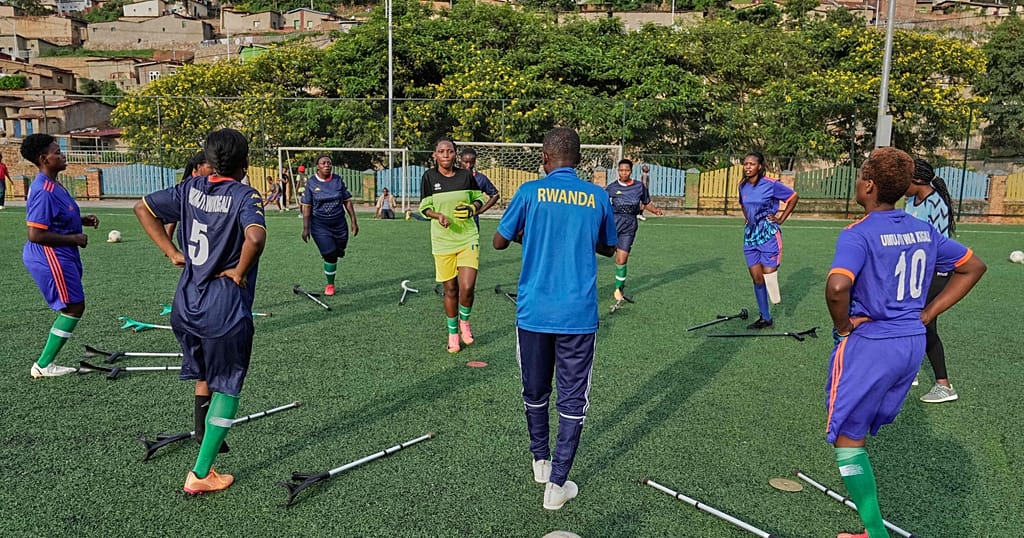
In Rwanda, amputee football is emerging as a vehicle for empowerment and social integration, particularly for women who have faced stigma and limited mobility after limb loss. The sport offers participants a platform to rebuild confidence, reclaim public spaces and experience a sense of freedom that extends beyond the pitch.
Nyiraneza Solange, a 22‑year‑old player, describes how the game transformed her outlook. “I used to avoid going out without my prosthesis because I feared people’s reactions,” she said. “When I started playing amputee football, I stopped caring about the stares. On the field I don’t think about my missing leg; I just play.” Her testimony mirrors a broader shift among Rwandan amputee athletes who are turning sport into a tool for personal resilience.
Goalkeeper Angelique Nikuze, another key member of the national women’s team, highlights the technical challenges of the game. “My biggest difficulty is defending shots that target my weaker side,” she explained. “Training has helped me improve my reflexes and adapt my technique.” Such adaptations underscore the rigorous physical demands placed on players, who must modify traditional football strategies to accommodate prosthetic limbs and varying levels of mobility.
The development of women’s amputee football in Rwanda is supported by a network of local clubs, NGOs and government agencies dedicated to disability inclusion. Since its formal introduction in 2018, the sport has attracted over 150 female participants across Kigali and surrounding provinces. Regular training sessions, regional tournaments and partnerships with international bodies such as the International Federation of Amputee Football (IFAF) have created pathways for talent development and cross‑border competition.
International observers note the broader psychosocial benefits of the sport. Fred Sorrels, manager of Haiti’s women’s amputee football team, remarked, “It’s a win‑win situation. The sport advances athletic inclusion while providing psychological and mental health gains for the athletes.” His comment reflects a growing consensus that adaptive sports can promote holistic wellbeing, helping participants achieve a sense of wholeness and social belonging.
Rwanda’s Ministry of Sports and Culture has pledged to expand funding for adaptive football programs, aiming to increase the number of qualified coaches and improve access to prosthetic technology. The upcoming East African Women’s Amputee Football Championship, scheduled for late 2026, will serve as a regional showcase for talent and may attract further investment.
As the women’s amputee football league gains momentum, it is forging a visible space for inclusion, health and self‑acceptance. The sport’s rapid growth suggests that future generations of Rwandan women with disabilities will have more opportunities to engage in competitive athletics, thereby reinforcing the country’s broader commitment to disability rights and social integration.

Comments are closed for this story.